
Vessel Tide | A Guide to Essential Maritime Data Analytics Systems » List of Marine Fleet Management Software Providers » Danelec Voyage Insights (Danelec)
Danelec Voyage Insights (Danelec)
Index
View All
Danelec Voyage Insights is a voyage solution that supports voyage decision-making based on simulations. Through analysis that considers weather conditions and operational constraints, it provides inputs for evaluating routes and speeds.
This webpage outlines the key features of Danelec Voyage Insights and expected use scenarios.
What You Will Learn
on This Webpage
- Strengths of the tool:
Uses AI simulation to provide inputs for evaluating route and speed options. - What implementation enables:
Supports evaluating voyage plans based on indicators such as ETA, fuel consumption, emissions, and CII. - Best fit companies:
Shipping companies and operators that want to balance fuel costs and compliance with environmental regulations within operational decision-making.
Key Features of Danelec Voyage Insights
Use Machine Learning
to Evaluate Voyage Plans by Objective
Danelec Voyage Insights is a voyage solution that supports planning with machine-learning models in line with voyage-specific goals. While considering multiple indicators—such as arrival time, fuel consumption, and CII—it provides inputs for comparing and evaluating plan options based on priorities.
By simulating how arrival time, fuel consumption, and emissions change when routes or speeds are adjusted, it becomes easier to clarify the balance that fits an operator’s policy among interdependent conditions.
Even in situations where experience-based judgment is hard to explain, shared simulation results can make discussions and consensus-building among stakeholders easier.
Suitable for Companies
That Want to Detect Early Signs
of Delays or Excessive Consumption
By taking into account changes in weather and sea conditions during a voyage, routes and speeds can be reviewed on an ongoing basis. Even if conditions change from the initial plan, revised options can be checked based on the situation, making it easier to consider response actions.
In addition, after a voyage ends, the planned route and a recommended route that considers weather conditions can be reviewed side by side, enabling review of deviations between plan and actual results. It is suitable for companies that want to build a data record of the rationale behind decisions for voyages with high fuel-cost exposure, or where explanations are required for delay penalties and compliance with environmental regulations.
POINT
Finding the Ideal
Solution for
Your Organization
Solution for
Your Organization
As explored above, the core strengths and focus of each system vary significantly. Finding the right solution starts with assessing your fleet's specific management goals and operational scale. To simplify your choice, we have categorized top-tier vessel management software by company type. Explore our recommendations below to find the ideal fit for your organization.
Main Functions of Danelec Voyage Insights
AI-Based Route and Speed Optimization
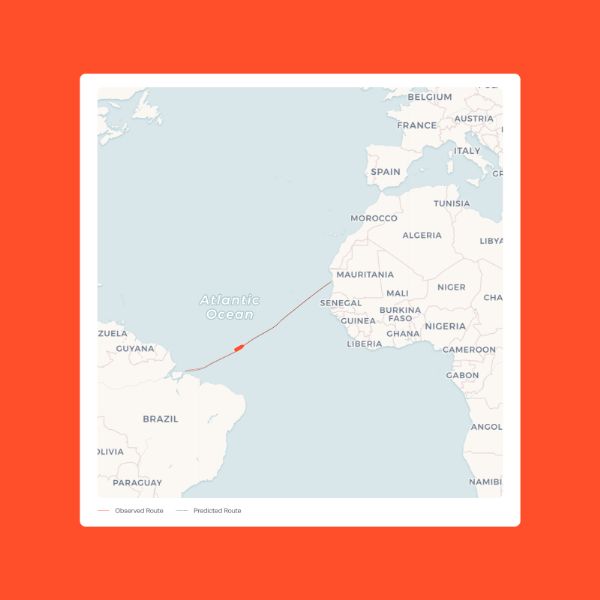
Source: Danelec Official Website
https://www.danelec.com/performance/danelec-voyage-insights
https://www.danelec.com/performance/danelec-voyage-insights
Post-Voyage Reporting and Benchmarking
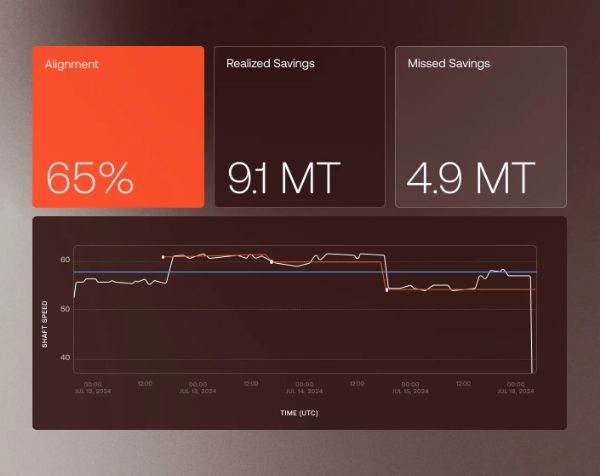
Source: Danelec Official Website
https://www.danelec.com/performance/danelec-voyage-insights
https://www.danelec.com/performance/danelec-voyage-insights
Scalability of Danelec Voyage Insights
Generated optimal routes support formats usable in ECDIS (Electronic Chart Display and Information System)*, enabling smooth connection to onboard operations. High-frequency data-collection equipment is not required for implementation. Operations can start even with existing data such as noon reports, and the usage can be scaled as data maturity increases.
However, optimization accuracy and available functions depend on input-data requirements, so required data should be confirmed in advance.
Source: Danelec Official Website (https://www.danelec.com/performance/danelec-voyage-insights)
Regulatory Compliance and Certification
of Danelec Voyage Insights
It includes functions that support compliance with environmental regulations such as CII, EEXI, and FuelEU Maritime, which are pressing issues in the maritime industry.
For reporting schemes such as EU-MRV, and for the specific status of compliance with cybersecurity and data standards, it is advisable to confirm details with the vendor during the evaluation process.
Implementation Costs and Pricing
of Danelec Voyage Insights
Details such as initial fees and monthly charges are not officially disclosed. Because configurations vary depending on usage conditions and the target fleet, an inquiry via the official website is required for specific costs.
Examples of Utilizing Danelec Voyage Insights
One expected use scenario is when the operations team at an ocean-going operator needs to meet arrival times while also addressing rising fuel costs as a planning priority.
Before departure, multiple route options are simulated, and plan options are compared and evaluated in terms of cost and required time. During a voyage, revised options that reflect changing weather conditions can also be reviewed, enabling responses to be considered while tracking deviations from the initial plan.
*The above is purely an intended use scenario and does not represent an actual implementation case.
Support and Follow-up
for Danelec Voyage Insights
After implementation, operational support is available from the Managed Services team. Staff with relevant expertise respond to questions on how to use the system and to operational consultations. For technical inquiries and troubleshooting, support is provided through official channels and a global network of service partners.
Company Overview of Danelec,
the Provider of Danelec Voyage Insights
- Company name:Danelec Marine A/S
- Address:Hørmarken 2, 3520 Farum, Denmark
- Phone number:+45 4594 4300
- Official website:https://www.danelec.com/
[Advertisement]
3 Recommended
Marine Fleet Management Software
3 Recommended
Marine Fleet Management Software
Advertiser Disclosure:
We receive compensation from some of the companies listed below.This compensation may affect which companies are included and the order in which they appear.
For Frequent Hazardous
or Long-Distance
Voyages
For Marine Fleet
Management Companies
or Long-Distance
Voyages
For Marine Fleet
Management Companies
MaSSA-One

* Image source: BEMAC Official
Website
(https://www.massa-one.com/english/)
(https://www.massa-one.com/english/)
Core Capabilities
Condition monitoring and anomaly detection
- Enables early detection of anomalies using data-driven automatic thresholds and expert-defined multi-condition detection.
- In the event of a failure, real-time data helps speed up root-cause identification, reducing downtime.
- This supports the prevention of future accidents and issues, contributing to reduced damage and losses involving vessels and cargo.
For Companies with
Frequent Business
in the EU
For Marine Shipping
Companies
Frequent Business
in the EU
For Marine Shipping
Companies
DeepSea
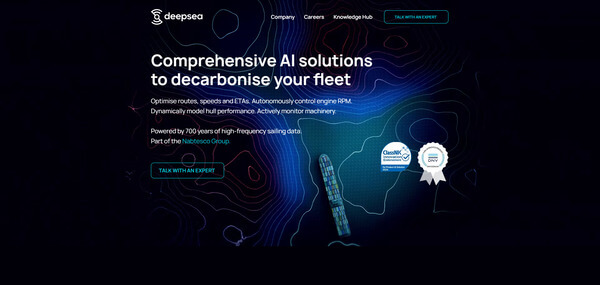
* Image source: DeepSea Official
Website
(https://www.deepsea.ai/)
(https://www.deepsea.ai/)
Core Capabilities
AI Fuel, CII &
Route Optimization
Route Optimization
- With the CII tracking feature, AI helps maintain and predict vessel performance.
- AI dynamically evaluates speeds and routes to suggest more fuel-efficient alternatives
- While complying with Europe-specific restrictions and regulations, it supports operations aimed at lower fuel consumption.
For Fleets with a Mix
of Older and Newly
Built Vessels
For Independent Ship
Management Companies
of Older and Newly
Built Vessels
For Independent Ship
Management Companies
Smart Ship Hub
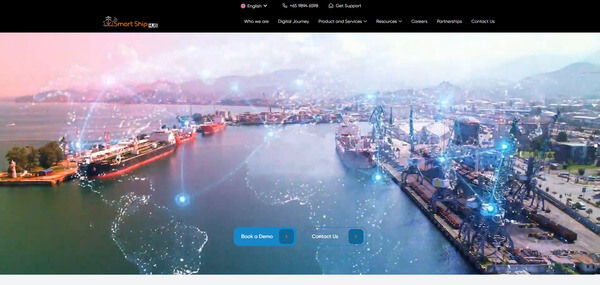
* Image source: Smart Ship Hub Official
Website
(https://smartshiphub.com/)
(https://smartshiphub.com/)
Core Capabilities
Data integration across a mixed fleet
- Supports aggregation of vessel data across different manufacturers and standards, as well as data from multiple vessels.
- Visualizes information distributed across onboard systems and supports building an environment for centralized management.
- Supports information sharing between shore teams and fleets with older vessels, older equipment, newly built vessels and new equipment.