
Vessel Tide | A Guide to Essential Maritime Data Analytics Systems » List of Marine Fleet Management Software Providers » ABB Ability™ OneBox - Marine Signals Monitoring (ABB)
ABB Ability™ OneBox - Marine Signals Monitoring (ABB)
Index
View All
ABB Ability™ OneBox - Marine Signals Monitoring is best understood as a starting point for collecting and recording onboard signal data. It is not an all-in-one vessel management system or a full remote diagnostics platform. Its main role is to help companies begin ship-to-shore data visibility by capturing selected signals from onboard equipment and making that data available for later review and analysis.
What You Will Learn in This Article
- Strengths:
Collection and recording of selected onboard signal data from shipboard systems and sensors. - Benefits:
How OneBox can help companies begin reviewing fuel, performance, and emissions-related data from both ship and shore. - Best-Fit Companies:
Companies that want a practical first step toward digitalizing existing vessels before implementing broader analytics or fleet management systems.
What You Should Know About ABB Ability™ OneBox Before Comparing Vessel Management Systems
Strengths
ABB Ability™ OneBox is best understood as a signal monitoring solution that helps companies begin collecting selected operational data from vessels. Its strength is not that it replaces every vessel management workflow, but that it can create an initial data-collection base for later review and analysis.
Key strengths to consider include:
- collection and recording of selected onboard signal data from shipboard systems and sensors
- transfer of vessel signal data to cloud infrastructure for access and analysis by the shipowner or operator
- support for reviewing fuel, performance, and emissions-related data
- possible use with ABB analytics software or third-party analytics environments, depending on the project requirements
- a practical first step toward digitalizing existing vessels
What You Can Achieve with Implementation
Companies may use OneBox to start collecting selected operational signals from onboard systems and review vessel-related data from both onboard and shore-side perspectives.
The collected data may support discussions related to fuel consumption, vessel performance, GHG, CII, EEXI, or EU-MRV. However, signal collection is only the starting point. Companies still need to decide how the data will be reviewed, which platform will analyze it, and what operational action should follow.
Implementation can also help companies clarify which additional sensors, platforms, or workflows may be needed after the initial data-collection stage.
Best-Fit Companies
ABB Ability™ OneBox is likely to fit companies that:
- want to begin digitalization on existing vessels
- need to collect basic vessel performance data before considering wider analytics
- want to review selected fuel, performance, or emissions-related data from shore
- need a clearer data source for monthly reporting or operational discussions
- are not yet ready to implement a larger fleet-wide data platform or remote diagnostics system
OneBox may be less suitable as a first choice when the priority is advanced remote diagnostics, OEM equipment lifecycle management, voyage optimization, or integrated fleet operations. In those cases, companies should compare it with systems designed around those broader roles.
Key Points to Confirm Before Inquiry
Before contacting ABB, companies should clarify:
- which vessels will be covered
- which onboard signals should be collected first
- which sensors, meters, navigation systems, fuel systems, engine-related equipment, or shaft power meters are already installed
- whether the first priority is fuel review, performance monitoring, emissions-related data preparation, reporting, or later analytics
- which platform will be used to review or analyze the collected data
- whether additional sensors may be required
- what installation, commissioning, support, SLA, and service conditions apply
OneBox is easier to compare when the first goal is clear. If the priority is start collecting and reviewing vessel data, OneBox may be a relevant option. If the priority is a broader digital operations platform, companies should compare it with systems built for that wider role.
Source: ABB Marine & Ports Official Website (https://new.abb.com/marine)
Key Features of ABB Ability™ OneBox
ABB Ability™ OneBox creates a basic data flow: collect selected onboard signals, record them, transfer them for ship-to-shore access, and prepare the data for later analysis. This makes it more useful to evaluate as a digitalization starter than as a complete vessel management platform.
What OneBox Is Designed For
OneBox is designed for companies that need a first layer of onboard data visibility. Its core purpose is to collect and record selected signals from the vessel and make that data available outside the ship.
This matters because many digitalization projects begin with a practical question: which operational data can be captured reliably, and who needs to review it? OneBox helps address that first step by focusing on signal recording and ship-to-shore data access.
More advanced use depends on what data is collected, which analytics environment receives it, and how the company uses the information. For that reason, OneBox should be assessed as the beginning of a data-use workflow, not as a system that completes digital transformation by itself.
Onboard Signal Collection and Recording
OneBox collects and records selected onboard signals from shipboard systems and sensors. Publicly described examples include integrated signals from ECDIS, fuel systems, engines, and shaft power meters.
The key point is not simply that data can be collected. Companies need to decide which signals should be captured first. For one vessel, the priority may be fuel consumption and vessel performance. For another, it may be emissions-related data, operational efficiency, or monthly reporting.
Signal coverage should be confirmed vessel by vessel. Existing equipment, available sensors, measuring instruments, communication conditions, and additional integration requirements can all affect the implementation scope.
Ship-to-Shore Access to Operational Data
OneBox transfers selected shipboard sensor signals to cloud infrastructure for access and analysis by the shipowner or operator. This can help shore-side teams review the same operational data that was collected from the vessel.
This is useful when onboard and shore-side teams need to discuss fuel consumption, performance changes, or operational KPIs using a shared data reference. It can also make monthly review conversations more concrete because the discussion starts from recorded operational data rather than isolated reports or recollection.
This does not mean OneBox guarantees better decisions. It provides data that can support better discussions; the quality of the decisions still depends on analysis, operating rules, and how the company uses the information.
A Practical Starting Point for Existing Vessel Digitalization
For existing vessels, the first barrier to digitalization is often data capture. Before advanced analytics, optimization, or predictive maintenance can be evaluated, the company needs a reliable way to collect relevant operational signals.
OneBox fits this early stage. It gives companies a way to begin with signal recording and data access, then consider additional sensors, analytics platforms, or broader fleet workflows later.
The implementation burden should still be checked carefully. The actual scope can vary depending on the vessel’s equipment, the signals to be collected, onboard communication conditions, commissioning method, cybersecurity requirements, and support conditions.
Connection with ABB and Third-Party Analytics Platforms
Collected vessel operating data may be visualized or analyzed through ABB analytics software or third-party platforms. Public launch information refers to ABB Ability™ Marine Fleet Intelligence, ABB Ability™ Genix Industrial Analytics and AI Suite, and third-party web-based platforms as possible analysis environments.
This distinction is important. OneBox is the entry point for collecting and transferring signal data. The depth of analysis depends on the analytics platform, selected data, dashboard design, reporting needs, and internal workflow.
Before inquiry, companies should decide whether the collected data will be used in ABB’s analytics services, a third-party platform, an internal reporting environment, or a combination of these.
Source: ABB Marine & Ports Official Website (https://new.abb.com/marine) / ABB Ability Official Information (https://global.abb/abb-ability)
POINT
Finding the Ideal
Solution for
Your Organization
Solution for
Your Organization
As explored above, the core strengths and focus of each system vary significantly. Finding the right solution starts with assessing your fleet's specific management goals and operational scale. To simplify your choice, we have categorized top-tier vessel management software by company type. Explore our recommendations below to find the ideal fit for your organization.
How ABB Ability™ OneBox Differs from Other Vessel Management Systems
ABB Ability™ OneBox should not be compared with other vessel management systems only by counting functions. Its primary role is narrower: it supports signal collection, recording, ship-to-shore access, and preparation for later data use.
When comparing OneBox with other systems, use these decision axes:
- Primary role: Is the system mainly for signal collection, fleet management, remote diagnostics, equipment monitoring, voyage optimization, or compliance reporting?
- Data coverage: Which onboard signals, sensors, meters, and systems can be connected on the target vessel?
- Analytics connection: Which platform will interpret the collected data, and what analytics are actually included?
- Ship-to-shore access: Who on shore needs to see the data, and how frequently will they review it?
- Implementation scope: Is the goal a first step for existing vessels, or a broader fleet-wide data platform?
- Relationship with ABB’s wider portfolio: Is the company evaluating OneBox alone, or also comparing ABB’s broader Smart Asset Management, Remote Diagnostic System, Fleet Intelligence, or advisory solutions?
OneBox is easier to evaluate when the company’s first objective is “capture and review vessel data.” If the main requirement is advanced remote diagnostics, OEM-level lifecycle management, automated voyage optimization, or integrated fleet operations, it should be compared with systems built around those roles.
Main Functions of ABB Ability™ OneBox
Core Functions at a Glance
| Function | What to check before inquiry |
|---|---|
| Collection and recording of onboard signal data | Which signals should be collected first, and from which onboard systems? |
| Ship-to-shore data transfer | How will the data be transmitted, accessed, and reviewed from shore? |
| Preparation of data for visualization and analysis | Which ABB or third-party platform will be used to view or analyze the collected data? |
| Compatibility with existing sensors and measuring instruments | Which existing sensors, meters, and systems can be connected, and where is additional work needed? |
| Data preparation for efficiency and environmental review | Which fuel, performance, GHG, CII, EEXI, or EU-MRV-related data needs to be organized? |
| Expansion through additional sensors | Which additional data points may be required after the initial rollout? |
These functions make OneBox more than a simple data logger, but they do not make it a complete compliance, optimization, or fleet management system by default. The value depends on which signals are collected and how the company uses them after collection.
What These Functions Mean for Vessel Operators
For vessel operators, signal collection becomes useful when it improves the quality of operational review. Recorded data can help teams check fuel consumption, performance trends, and emissions-related indicators with more consistency.
It can also reduce reliance on fragmented reports or individual memory. When shore-side teams and onboard teams review the same signal data, they can discuss changes in fuel use, engine behavior, or operational KPIs with a shared reference point.
Still, visualization is not the same as improvement. Companies need a clear process for reading the data, assigning responsibility, and turning findings into operational actions.
Scalability of ABB Ability™ OneBox
OneBox can be assessed as a scalable starting point because it begins with onboard signal collection and can later connect collected data to wider analytics use. A company might start with fuel, performance, and emissions-related signals, then review whether additional sensors or data sources should be added.
Public launch information describes OneBox as compatible with platforms that allow data analysis and interpretation, and as scalable to include sensors from additional equipment. Vessel operating data may be used with ABB Ability™ Marine Fleet Intelligence, ABB Ability™ Genix Industrial Analytics and AI Suite, or third-party web-based platforms.
The expansion range should not be assumed without confirmation. Compatibility, data frequency, additional sensors, communication requirements, cybersecurity conditions, platform requirements, and service terms should all be checked before treating OneBox as a long-term data platform.
Source: ABB Marine & Ports Official Website (https://new.abb.com/marine) / ABB Ability Genix Information (https://new.abb.com/process-automation/genix)
Regulatory Compliance and Certification of ABB Ability™ OneBox
OneBox can support regulatory and environmental review by helping companies collect and organize relevant operational data. Fuel consumption, vessel performance, GHG emissions, and operational efficiency data can become useful inputs when teams discuss CII, EEXI, EU-MRV, or other reporting-related workflows.
The careful distinction is this: OneBox can help prepare data for compliance-related review, but it should not be described as a system that ensures compliance. Final regulatory handling depends on the required data set, calculation method, reporting process, verification requirements, and the company’s internal compliance review.
Certification and cybersecurity requirements should also be checked directly with ABB. No company should assume that OneBox automatically satisfies a specific regulatory, classification, cybersecurity, or reporting requirement without confirming the applicable scope and contract conditions.
Implementation Costs and Pricing of ABB Ability™ OneBox
No standard OneBox package price was identified in the reviewed public materials. Companies should therefore treat pricing as an inquiry item rather than assuming a fixed cost, low-cost implementation, or a simple monthly fee.
Cost can vary depending on:
- number of vessels covered
- signals to be collected
- existing sensors, meters, navigation systems, fuel systems, and engine-related equipment
- whether additional sensors are required
- onboard communication environment
- commissioning method, whether onboard or remote
- analytics platform selection
- support scope, SLA, and service conditions
- cybersecurity or data-handling requirements
- future expansion requirements
Before contacting ABB, prepare a short implementation brief. It should list the target vessels, desired signals, existing connected equipment, first operational goal, analytics destination, reporting needs, and expected support level. This will make the inquiry more concrete and help avoid comparing systems only by headline functionality.
Source: ABB Contact Center (https://new.abb.com/contact-centers)
Who ABB Ability™ OneBox Is Best Suited For
ABB Ability™ OneBox is best suited for companies that want to begin with vessel data visibility before moving into more advanced digital workflows.
It is likely to fit companies that:
- want to start digitalization on existing vessels
- need to collect fuel, performance, or emissions-related data first
- want shore-side teams to review operational data from the vessel
- need better material for monthly reports or KPI discussions
- prefer a first signal-collection step before investing in a broader fleet-wide system
When Another System May Be a Better First Choice
It may be less suitable as the first choice if the main requirement is advanced remote diagnostics, automated predictive maintenance, OEM-specific lifecycle management, or a fleet platform that already combines broad operational, commercial, and compliance workflows.
It may also be hard to evaluate if the company has not defined which signals it wants to collect. OneBox is easier to shortlist when the first operational goal is specific: fuel review, performance trend review, emissions-related data preparation, monthly reporting, or data preparation for later analytics.
Use Cases for ABB Ability™ OneBox
The following are possible use scenarios for ABB Ability™ OneBox. They should be read as ways to evaluate fit, not as verified implementation cases or guaranteed outcomes.
Fuel Consumption and Performance Review
OneBox can be used as a starting point for reviewing fuel consumption and vessel performance data. Signals from fuel systems, engines, shaft power meters, and related onboard equipment can help teams see changes over time rather than relying only on periodic reports.
This can support discussions about why fuel use changed, whether performance trends need closer review, and what additional data should be collected. It does not automatically identify every cause or guarantee fuel savings.
Monthly Reporting and Data-Based Discussions
Monthly reporting often becomes difficult when teams can see the result but not the operational context behind it. OneBox can help by recording selected signal data and making it available for review.
This gives teams a common basis for discussing fuel variation, performance change, or operating conditions. The system does not replace operational expertise; it gives that expertise a clearer data reference.
The above is an intended use scenario and does not represent an actual implementation case.
GHG, CII, and EEXI-Related Data Preparation
Fuel consumption, GHG emissions, and operational efficiency data are important inputs for environmental review. OneBox can help companies collect and organize data that may be used in CII, EEXI, EU-MRV, or other reporting-related workflows.
The system should not be described as automatically handling compliance. Companies still need to confirm the exact data requirements, calculation logic, verification process, and reporting responsibility for each framework.
Existing Vessel Digitalization
Existing vessels often need a practical first step before broader digitalization becomes realistic. OneBox can help companies begin by collecting selected signals from onboard systems, then reviewing whether additional sensors or analytics connections are needed later.
This makes it useful for companies that want to move from “we should use vessel data” to “we know which data to collect first.” The implementation scope should still be confirmed for each vessel.
What to Check Before Considering ABB Ability™ OneBox
Before contacting ABB, companies should clarify:
- which vessels will be covered
- which onboard signals need to be collected
- which sensors, meters, and systems are already installed
- whether fuel, performance, GHG, CII, EEXI, or EU-MRV-related data is the first priority
- who needs to access the data from shore
- which analytics platform will be used
- whether additional sensors may be needed later
- what support level and service conditions are required
This preparation helps companies compare OneBox with other systems based on fit, not just product category.
Signals and Equipment to Be Connected
The starting point is the signal list. Companies should identify whether they need data from ECDIS, fuel systems, engines, shaft power meters, onboard sensors, navigation equipment, or other measuring instruments.
They should also check which signals are already available and which would require additional sensors or integration work. Assuming that every onboard system can be connected without conditions can lead to a poor comparison.
First Operational Goal
OneBox is easier to evaluate when the first goal is narrow. A company might start with fuel consumption review, performance monitoring, GHG-related data preparation, monthly reporting, ship-to-shore information sharing, or a foundation for later analytics.
If the purpose is unclear, the signal list, dashboard needs, analytics platform, and cost estimate will also remain unclear. Define the first use case before discussing broader expansion.
Analytics Platform and Data Use
Companies should decide where the collected data will go after OneBox records it. Public launch information mentions ABB Ability™ Marine Fleet Intelligence, ABB Ability™ Genix Industrial Analytics and AI Suite, and third-party web-based platforms.
Internal BI tools, reporting processes, and shore-side review workflows should also be considered. The analytics value comes from how the data is interpreted and used, not from signal collection alone.
Regulatory and Reporting Requirements
If the project is tied to CII, EEXI, EU-MRV, GHG emissions, or fuel reporting, the company should define the exact data required before implementation. Fuel consumption accuracy, operating profile, data frequency, calculation rules, and report workflow all matter.
OneBox can help create a data-collection foundation, but it does not replace compliance review. Regulatory interpretation and reporting responsibility should be confirmed with the appropriate specialists.
Installation, Support, and Contract Conditions
Implementation conditions should be checked before comparing OneBox with other systems. Public launch information describes OneBox commissioning as possible either onboard or remotely, but the appropriate method can depend on the vessel, equipment, communication environment, and support contract.
Companies should also confirm support scope, remote support availability, SLA, troubleshooting process, cybersecurity requirements, and conditions for future expansion or additional sensors. These items can affect both operational reliability and total cost.
Source: ABB Marine & Ports Official Website (https://new.abb.com/marine) / ABB Contact Center (https://new.abb.com/contact-centers)
Support and Follow-up for ABB Ability™ OneBox
Product Inquiry Through ABB Contact Center
For product inquiries, companies should contact ABB through the ABB Contact Center or the relevant regional contact route. Because OneBox implementation depends on vessel conditions and data requirements, the inquiry should include the target vessels, desired signals, existing equipment, analytics platform, and first use case.
Marine Technical Support and Troubleshooting
ABB’s broader marine service pages describe technical support, troubleshooting, and different service levels for marine customers. However, companies should confirm which support items apply specifically to OneBox and which apply to other ABB marine services, such as Smart Asset Management, Remote Diagnostic System, or 24/7 Care technical support.
For OneBox, useful confirmation points include whether support covers installation, commissioning, data consistency, remote access, analytics connection, cybersecurity requirements, or post-installation troubleshooting.
SLA and Remote Support Conditions
SLA and remote support conditions should be reviewed during implementation planning. Companies should confirm response hours, escalation route, support language or region, remote access conditions, cybersecurity requirements, and what happens if additional sensors or analytics connections are added later.
Do not assume that 24/7/365 support, guaranteed response times, or remote troubleshooting are automatically included in every OneBox contract. These points should be checked directly with ABB.
Source: ABB Marine & Ports Service Information (https://new.abb.com/marine/service) / ABB Contact Center (https://new.abb.com/contact-centers)
Frequently Asked Questions About ABB Ability™ OneBox
What is ABB Ability™ OneBox used for?
ABB Ability™ OneBox is used to collect and record selected onboard signal data and make that data available for ship-to-shore review and later analysis. It is best understood as a starting point for vessel data visibility.
Is OneBox a vessel management system or a signal monitoring solution?
It is more precise to describe OneBox as a marine signals monitoring solution. It can support vessel management discussions by providing operational data, but it should not be presented as a complete fleet management platform by itself.
Can OneBox be used on existing vessels?
OneBox is positioned as a practical entry point for companies that want to begin digitalization on existing vessels. The actual implementation scope should be confirmed based on the vessel’s equipment, available signals, communication environment, and required support.
What data can OneBox collect?
Publicly described examples include signals from ECDIS, fuel systems, engines, shaft power meters, onboard sensors, and navigation equipment. The exact signal list should be confirmed for each target vessel.
Can OneBox support CII, EEXI, or EU-MRV-related data preparation?
OneBox can help collect and organize data that may be used in CII, EEXI, EU-MRV, or other environmental reporting-related workflows. It should not be described as guaranteeing compliance or automatically preparing all required reports.
Is ABB Ability™ OneBox pricing publicly available?
No standard public pricing was identified in the reviewed materials. Companies should contact ABB with details such as vessel count, target signals, connected equipment, communication conditions, analytics platform, and support requirements.
What should companies check before contacting ABB?
Companies should clarify the target vessels, desired signals, existing sensors and systems, first operational goal, analytics destination, regulatory or reporting needs, installation conditions, and support requirements. This makes the inquiry more practical and improves comparison with other systems.
Company Overview of ABB, the Provider of ABB Ability™ OneBox
- Company Name ABB Asea Brown Boveri Ltd
- Location Affolternstrasse 44, 8050 Zurich, Switzerland
- Phone Number +41 43 317 7111
- Official Website https://global.abb/
- Relevant Product or Service ABB Ability™ OneBox - Marine Signals Monitoring / ABB Marine & Ports digital services and solutions
ABB provides ABB Ability™ OneBox through its marine digital solutions portfolio. For country-specific contact information, product availability, implementation support, and service conditions, companies should confirm the latest details through ABB’s official website or ABB Contact Center.
Source: ABB Official Website (https://global.abb/) / ABB Contact Center (https://new.abb.com/contact-centers)
[Advertisement]
3 Recommended
Marine Fleet Management Software
3 Recommended
Marine Fleet Management Software
Advertiser Disclosure:
We receive compensation from some of the companies listed below.This compensation may affect which companies are included and the order in which they appear.
For Frequent Hazardous
or Long-Distance
Voyages
For Marine Fleet
Management Companies
or Long-Distance
Voyages
For Marine Fleet
Management Companies
MaSSA-One

* Image source: BEMAC Official
Website
(https://www.massa-one.com/english/)
(https://www.massa-one.com/english/)
Core Capabilities
Condition monitoring and anomaly detection
- Enables early detection of anomalies using data-driven automatic thresholds and expert-defined multi-condition detection.
- In the event of a failure, real-time data helps speed up root-cause identification, reducing downtime.
- This supports the prevention of future accidents and issues, contributing to reduced damage and losses involving vessels and cargo.
For Companies with
Frequent Business
in the EU
For Marine Shipping
Companies
Frequent Business
in the EU
For Marine Shipping
Companies
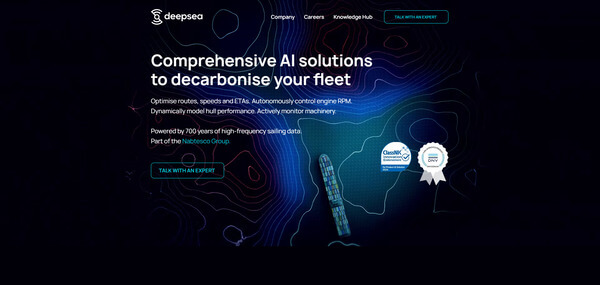
DeepSea
* Image source: DeepSea Official
Website
(https://www.deepsea.ai/)
(https://www.deepsea.ai/)
Core Capabilities
AI Fuel, CII &
Route Optimization
Route Optimization
- With the CII tracking feature, AI helps maintain and predict vessel performance.
- AI dynamically evaluates speeds and routes to suggest more fuel-efficient alternatives
- While complying with Europe-specific restrictions and regulations, it supports operations aimed at lower fuel consumption.
For Fleets with a Mix
of Older and Newly
Built Vessels
For Independent Ship
Management Companies
of Older and Newly
Built Vessels
For Independent Ship
Management Companies
Smart Ship Hub
* Image source: Smart Ship Hub Official
Website
(https://smartshiphub.com/)
(https://smartshiphub.com/)
Core Capabilities
Data integration across a mixed fleet
- Supports aggregation of vessel data across different manufacturers and standards, as well as data from multiple vessels.
- Visualizes information distributed across onboard systems and supports building an environment for centralized management.
- Supports information sharing between shore teams and fleets with older vessels, older equipment, newly built vessels and new equipment.