
Vessel Tide | A Guide to Essential Maritime Data Analytics Systems » What Is Vessel Management Software? How to Choose
What Is Vessel Management Software? How to Choose
Index
View All
Vessel management software is a tool for centrally managing safe operations at sea, fuel efficiency, and administrative tasks. To meet environmental requirements such as CII ratings and cope with the growing shortage of seafarers, companies need to move toward data-driven management instead of relying on experience or intuition. This webpage explains how to choose vessel management software that fits the company’s challenges.
How Vessel Management Software Is Categorized and
What Functions Are Needed
Vessel management software covers a wide range of areas, including performance monitoring and safety management. In technical management, it can generally be grouped into seven main functions, depending on the purpose.
It works like a “health app,” providing 24/7 visibility into marine conditions and helping detect early signs of abnormalities. To support both lower risk of serious incidents and better cost efficiency, it is important to combine functions in a way that fits the company’s operating conditions.
The sections below introduce how to choose each function and the benefits of implementing it.
Vessel Management Software for Performance Monitoring
How to Choose a System
Look for accuracy and scalability that enable stable collection of high-frequency data. Check whether the system can normalize weather conditions, supports international standards, and has third-party certification. Choosing a solution with strong integration capabilities tends to expand how it can be used in operations. Whether it offers analysis models suited to the vessel’s characteristics is also a key factor that affects long-term adoption.
Benefits of
Implementing the System
It helps companies comply with environmental regulations while improving fuel efficiency and reducing costs. By easing the workload of data collection and consolidation, it can support both greater operational efficiency and stronger profitability. The accumulated data can also be used effectively as input for decisions on future replacement newbuilds.
Vessel Management Software for Safety Management
How to Choose a System
Prioritize offline functionality and ease of use so it can be used at sea. Integration with maintenance functions and the ability to respond quickly to the latest regulations are also important. A system with a UI that crew members can use without hesitation is key to long-term adoption. Whether it can be used on mobile devices is another major factor that affects the efficiency of onboard inspections.
Benefits of
Implementing the System
It helps reduce data inconsistencies and reporting delays, supporting the availability of high-accuracy data needed for regulatory compliance. By streamlining administrative work, it helps create an environment where crew members can focus on safe operations. Automatically generating accurate logs helps maintain compliance and provides objective evidence if issues arise.
Vessel Management Software for Port Management
How to Choose a System
Choose a system that can integrate with voyage management systems and similar tools to reduce duplicate data entry. It is also essential that the system offers an intuitive, user-friendly interface for port agents. Lowering the effort required for input helps improve adoption and can support further automation. A support structure that can respond flexibly to changes in regulations and local business practices is also important.
Benefits of
Implementing the System
Automatic checks of port cost settlement help prevent overpayments, calculation errors, and fraud, improving cost transparency. Digitizing approval workflows can speed up authorization, while also enabling cost analysis based on accumulated data. Making incidental expenses visible also makes it easier to choose ports of call.
Vessel Management Software
for Automated Voyage Reporting
How to Choose a System
Prioritize connectivity with existing flow meters and VDRs. Along with the ability to meet the latest regulations such as IMO DCS, stable operation at sea—where communications can be unreliable—is also essential. Ease of use that allows crew members to enter data without confusion is another key factor affecting accurate data collection and long-term adoption.
Benefits of
Implementing the System
It automatically collects high-accuracy data required for CII ratings and other reporting, helping prevent reporting delays and human error. By reducing administrative work, crews can focus on safe operations, while real-time visibility into vessel movements helps optimize operational efficiency. It can also support lower fuel costs and build shipper trust through the delivery of transparent reports.
Vessel Management Software for Hull Stress Monitoring
How to Choose a System
Prioritize whether it offers analysis functions suited to the vessel type. Support arrangements from classification societies are also essential. Cloud capability that provides an overall view, along with screen design that makes key information easy to see at a glance, is recommended. Durable sensors and a design that makes inspection and replacement easy are also key to long-term operation.
Benefits of
Implementing the System
By quantifying hull loads, it helps reduce the risk of structural damage and supports longer service life while helping prevent declines in asset value. It enables decisions—such as course adjustments—based on quantitative evidence rather than rules of thumb, improving safety. It can also help prevent excessive loads during cargo handling and reduce repair costs.
Vessel Management Software
for Mooring Line Tension Monitoring
How to Choose a System
Check whether thresholds and notification methods can be set flexibly to match operational needs. Sensor robustness that can withstand sea conditions and the port environment is an important selection criterion. If the system can analyze historical logs, it can be used to review near-miss incidents and review internal standards. It is also reassuring to confirm how easily settings can be adjusted to reflect the characteristics of each berth.
Benefits of
Implementing the System
It can be expected to reduce the risk of mooring line failures and accidents caused by excessive tension. By quantifying tension levels, it helps standardize safety responses. In addition to reducing incidents in port, it also supports worker safety. Objective condition monitoring makes it possible to predict replacement timing, which can also help optimize spare parts inventory costs.
Vessel Management Software
for Marine Condition Monitoring
How to Choose a System
Check whether the solution offers sensors and analysis models that match likely failure patterns, as well as measures to reduce false alarms. Compatibility with class requirements that recognize PMS integration and CBM can be useful for improving maintenance planning. Considering scalability with future autonomous operations in mind is another point that can broaden how the system is used.
Benefits of
Implementing the System
It supports a shift toward condition-based maintenance through early anomaly detection and helps reduce unexpected downtime. Condition-based inspections can make regular inspections more efficient. A well-grounded maintenance plan can optimize spare parts costs and technician dispatch, helping reduce ongoing maintenance expenses. Making full use of equipment life can also help prevent unexpected repair costs.
Voyage Data Analytics for Marine Fleet Management
How to Choose a System
- Integration with Bridge Equipment: Choose a system that can accurately integrate voyage data with onboard bridge equipment such as ECDIS, AIS, GPS, and weather routing platforms.
- Real-Time Analytics & Actionable Insights: High-quality meteorological and oceanographic data, along with real-time analytics capabilities, are essential for safe and efficient voyage optimization. The system should also provide actionable insights—such as dynamic route adjustments and optimal speed recommendations—rather than simply displaying navigational data.
- Ship-to-Shore Collaboration: In addition, a shared interface between onboard crews and shore-based operators is important for improving collaboration and enabling faster operational decision-making.
Benefits of Implementing the System
- Fuel Efficiency & Cost Reduction: Voyage optimization systems help improve fuel efficiency and navigational safety by continuously analyzing vessel routes, speed, weather conditions, and operational performance. By enabling Just-In-Time arrivals and optimized speed profiles, the system can significantly reduce unnecessary fuel consumption and operational costs.
- Environmental Compliance: It also supports compliance with environmental regulations such as CII through accurate emissions tracking and reporting.
- Enhanced Navigational Safety: In addition, dynamic weather routing helps vessels avoid adverse weather conditions, reducing risks to crews, cargo, and vessel structures while supporting safer and more efficient fleet operations.
Vessel Management Software for Fuel Monitoring
How to Choose a System
- High-Precision Measurement & Integration: Choose a system that supports high-precision fuel flow measurement and seamless integration with onboard systems such as engine monitoring platforms, AIS, and voyage management systems.
- High-Frequency Data & Dashboards: The ability to continuously collect and analyze high-frequency operational data is essential for accurately monitoring fuel consumption and vessel performance. It is also important to confirm whether the platform provides intuitive dashboards that visualize fuel efficiency trends, emissions data, and operational anomalies in real time.
- Scalability & Connectivity: Scalability across mixed fleets, cloud-based accessibility, and stable performance under limited communication bandwidth are additional factors that support long-term operational use.
Benefits of Implementing the System
- Fuel Efficiency & Cost Reduction: Fuel monitoring systems help improve fuel efficiency and reduce operational costs by continuously analyzing fuel consumption and engine performance data during vessel operations. Real-time monitoring enables operators to identify excessive fuel usage early and optimize vessel speed, routing, and engine settings accordingly.
- Environmental Compliance: The system also supports compliance with environmental regulations such as CII and IMO DCS through accurate emissions tracking and automated reporting.
- Predictive Maintenance & Fleet Benchmarking: In addition, continuous fuel performance monitoring can support predictive maintenance by detecting abnormal consumption patterns linked to engine deterioration or machinery issues. Accumulated operational data can further be used for fleet benchmarking and long-term voyage optimization strategies.
Maritime Crew Management Software for Fleet Operations
How to Choose a System
- Integration & Communication: Choose a Maritime Crew Management Software solution that can seamlessly integrate with Vessel Management Systems (VMS), AIS, GPS, and onboard operational platforms. Real-time information sharing between ship and shore is essential for optimizing crew deployment, labor management, and operational coordination.
- Automated Tracking & Compliance: It is also important to confirm whether the system supports automated crew scheduling, qualification and license tracking, payroll management, and working hour compliance.
- Usability & Connectivity: In addition, intuitive usability, fleet-wide scalability, and stable cloud connectivity are key factors that support long-term operational efficiency and smooth collaboration between onboard crews and shore-based teams.
Benefits of Implementing the System
- Reduced Workload & Automation: Implementing Maritime Crew Management Software helps reduce administrative workload and minimize human error by automating traditionally manual crew management tasks. Digitizing crew scheduling, certification renewals, and working hour records improves operational efficiency while strengthening compliance with international maritime regulations.
- VMS Integration & Swift Decisions: When integrated with a VMS, the system also enhances real-time communication between vessels and shore-based operators, enabling faster and more accurate decision-making.
- Fatigue & Risk Management: In addition, combining crew management data with navigational and operational information supports fatigue management, proper personnel allocation, and proactive risk management, helping improve both fleet safety and overall operational performance.
Driving Maritime Digital Transformation with Vessel Management Systems
How to Choose for Maritime DX
- Silo-Free Data Integration: Prioritize platforms that automate data collection from IoT sensors and onboard systems, completely replacing manual spreadsheets.
- Global Accessibility: Look for modern user interfaces with reliable cloud capability and mobile access, ensuring swift decision-making for both shore teams and crew.
Benefits of Digital Transformation
- Streamlined Workflows: Integrating operations, chartering, and finance departments in real time reduces administrative workloads and helps prevent costly communication gaps.
- Data-Driven Decisions: Shifts the company’s focus from intuition to precise, real-time profitability tracking, maximizing the fleet's commercial competitiveness.
The Future of Green Shipping and Vessel Management Systems
How to Choose for Green Shipping
- Continuous Emissions Tracking: Choose a system certified to automatically measure and log high-frequency fuel consumption and carbon footprints 24/7.
- AI-Driven Optimization: Look for solutions equipped with advanced speed optimization and weather-routing features to actively minimize fuel waste.
Benefits of Green Operations
- Automated Environmental Compliance: Streamlines complex regulatory reporting, significantly reducing the risk of calculation errors, penalties, and reputational damage.
- Lower Fuel Costs & Higher Trust: Maximizes hull and engine efficiency to directly slash voyage expenses while building long-term trust with eco-conscious shippers.
[Advertisement]
3 Recommended
Marine Fleet Management Software
3 Recommended
Marine Fleet Management Software
Advertiser Disclosure:
We receive compensation from some of the companies listed below.This compensation may affect which companies are included and the order in which they appear.
For Frequent Hazardous
or Long-Distance
Voyages
For Marine Fleet
Management Companies
or Long-Distance
Voyages
For Marine Fleet
Management Companies
MaSSA-One

* Image source: BEMAC Official
Website
(https://www.massa-one.com/english/)
(https://www.massa-one.com/english/)
Core Capabilities
Condition monitoring and anomaly detection
- Enables early detection of anomalies using data-driven automatic thresholds and expert-defined multi-condition detection.
- In the event of a failure, real-time data helps speed up root-cause identification, reducing downtime.
- This supports the prevention of future accidents and issues, contributing to reduced damage and losses involving vessels and cargo.
For Companies with
Frequent Business
in the EU
For Marine Shipping
Companies
Frequent Business
in the EU
For Marine Shipping
Companies
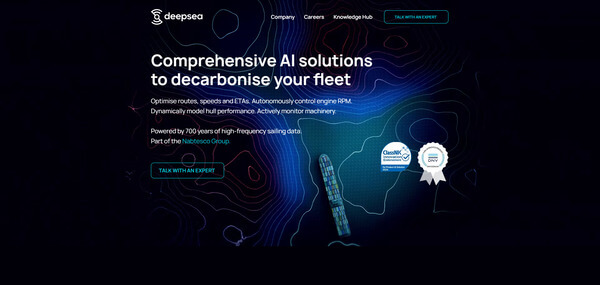
DeepSea
* Image source: DeepSea Official
Website
(https://www.deepsea.ai/)
(https://www.deepsea.ai/)
Core Capabilities
AI Fuel, CII &
Route Optimization
Route Optimization
- With the CII tracking feature, AI helps maintain and predict vessel performance.
- AI dynamically evaluates speeds and routes to suggest more fuel-efficient alternatives
- While complying with Europe-specific restrictions and regulations, it supports operations aimed at lower fuel consumption.
For Fleets with a Mix
of Older and Newly
Built Vessels
For Independent Ship
Management Companies
of Older and Newly
Built Vessels
For Independent Ship
Management Companies
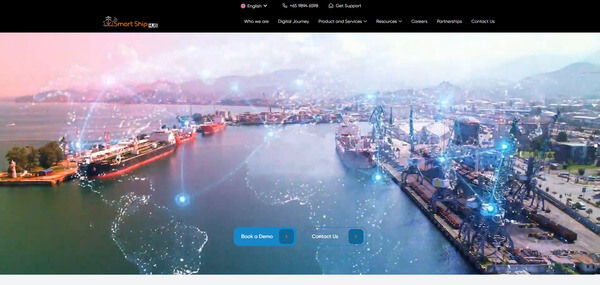
Smart Ship Hub
* Image source: Smart Ship Hub Official
Website
(https://smartshiphub.com/)
(https://smartshiphub.com/)
Core Capabilities
Data integration across a mixed fleet
- Supports aggregation of vessel data across different manufacturers and standards, as well as data from multiple vessels.
- Visualizes information distributed across onboard systems and supports building an environment for centralized management.
- Supports information sharing between shore teams and fleets with older vessels, older equipment, newly built vessels and new equipment.