
Vessel Tide | A Guide to Essential Maritime Data Analytics Systems » List of Marine Fleet Management Software Providers » Everllence CEON(Everllence SE)
Everllence CEON(Everllence SE)
Index
View All
Everllence CEON, formerly MAN CEON, should be evaluated as an OEM machinery data platform for Everllence and former MAN equipment. It is not a general ship management or administrative system. Its core role is to connect machinery data to a cloud-based platform so operators and support teams can visualize, analyze, and use that data for technical decision-making.
What You’ll Learn in This Article
- Strengths:
Machinery data monitoring, real-time analytics, and data visualization centered on Everllence and former MAN equipment. - Benefits:
How CEON can support machinery condition review, remote support, fuel- and emissions-related data analysis, and related Everllence digital services. - Best-Fit Companies:
Companies operating vessels with Everllence or former MAN engines, turbochargers, SCR systems, or other connected machinery.
What to Know About Everllence CEON Before Comparing Vessel Management Systems
Key Strengths
Everllence CEON is centered on Everllence and former MAN machinery data, rather than general ship management administration. Its value lies in connecting machinery in the field to a cloud-based platform for visualization, real-time analytics, and condition monitoring.
Key strengths to consider include:
- Machinery data monitoring for Everllence and former MAN assets
- Cloud-based data visualization and real-time analytics
- Sub-component-level visibility when the relevant equipment and sensors are connected
- Use of cloud, IoT, machine learning, algorithms, and data analytics to process machinery data
- Connection with related Everllence digital services, including PrimeServ Assist, Asset+, Data+, and CEON TechBot
- Strong relevance when OEM machinery data, remote support, and Everllence-backed digital services are part of the evaluation
What Implementation Can Help You Achieve
Everllence CEON can help operators build a clearer data basis for reviewing machinery condition, engine performance, fuel-related data, urea usage, and emissions-related operating information. Its value lies in making connected machinery data easier to view, analyze, and use in technical discussions.
CEON should not be evaluated only as a dashboard. It is better understood as an Everllence machinery data platform that can connect with services such as PrimeServ Assist, Asset+, Data+, and CEON TechBot. Depending on the selected scope, CEON data may support remote advice, troubleshooting, lifecycle updates, structured data access, and technical documentation support.
The actual outcome depends on the machinery installed, sensor availability, data quality, selected services, and the company’s internal maintenance and operating processes.
Best-Fit Companies
Everllence CEON is likely to be a stronger fit for companies operating vessels equipped with Everllence or former MAN machinery. It is especially relevant when operators want to monitor engines, turbochargers, SCR systems, or other connected equipment using OEM machinery data.
It may also suit companies that want to connect onboard machinery data with shore-side monitoring, PrimeServ Assist support, or related services such as Data+, Asset+, and CEON TechBot.
Companies looking mainly for a vendor-neutral platform that integrates data from many machinery brands and onboard systems should compare CEON with broader vessel data integration platforms. CEON may still be relevant for the Everllence machinery portion of a mixed fleet, but it should not be treated as a universal system for every ship management workflow.
Key Points to Confirm Before Contacting Everllence
Before contacting Everllence, companies should clarify:
- Which vessels, engines, and machinery will be covered
- Whether the target assets are Everllence or former MAN machinery
- Which components and sensor signals need to be monitored
- Whether PrimeServ Assist, Asset+, Data+, or CEON TechBot is part of the intended scope
- Who needs access from onboard, shore-side, and support teams
- Whether the project is for newbuilds, existing assets, or a mixed fleet
- Which cybersecurity, class-related, SLA, and contract requirements apply
This page summarizes official information and adds comparison-oriented points for companies considering Everllence CEON. It is designed to help readers organize what to check before comparing systems or making an inquiry.
Source: Everllence CEON Official Website (https://www.everllence.com/marine/solutions/digital-marine-products/ceon)
Key Features of Everllence CEON
Everllence CEON should first be understood as a machinery data platform. Its core role is to connect Everllence and former MAN machinery to a cloud environment, make operating data visible, and provide a data foundation for analytics, remote support, and related Everllence digital services.
What CEON Is Designed For
Everllence CEON, formerly MAN CEON, connects Everllence machinery in the field to a cloud-based data platform. It collects, visualizes, and analyzes machinery data so operators and support teams can monitor connected equipment more effectively.
This makes CEON different from a general vessel management system that covers crewing, procurement, voyage planning, documentation, safety workflows, or broad administrative management. CEON is closer to an OEM machinery data platform: it focuses on data from Everllence machinery and connects that data to Everllence digital services.
The exact scope depends on the installed machinery, connected sensors, selected services, and contract terms. Before comparing CEON with other vessel management systems, operators should confirm whether they primarily need machinery data visibility and OEM-backed support, or a broader ship management workflow platform.
Machinery Data Monitoring from Everllence and Former MAN Assets
CEON centers on machinery data from Everllence and former MAN assets. Depending on the vessel and installation, this may include data from engines, turbochargers, SCR systems, and other connected machinery or equipment.
CEON is built around continuous data transmission from onboard machinery. The data can support reviews of operating condition, engine performance, fuel-related information, emissions-related signals, and other indicators that matter for maintenance and operational decisions.
The important question is not only whether CEON can collect data. Operators should confirm which specific machinery, sensors, and signals are included for the vessel or fleet under review. The available scope may differ by asset type, engine type, service package, and whether the project is for a newbuild or an existing asset.
Sub-Component-Level Visibility
Everllence describes CEON as monitoring machinery down to small subcomponents. This level of visibility can help operators and support teams observe changes in machinery condition in more detail than high-level vessel data alone.
For decision-making, that visibility can help teams evaluate whether changes in component behavior affect maintenance timing, troubleshooting priorities, or discussions with OEM support.
CEON should not be described as detecting every abnormality, preventing every failure, or automatically identifying every root cause. Its role is to provide a more detailed machinery data view that can be used with PrimeServ Assist, internal technical teams, and established maintenance procedures.
Real-Time Analytics, IoT, and Machine Learning Capabilities
Everllence CEON uses cloud infrastructure, IoT, machine learning, algorithms, and data analytics to process machinery data. Customizable dashboards allow users to view operating data and monitor machinery status.
Everllence describes CEON as connecting machinery to a German-based Amazon Cloud and states that it uses Amazon Web Services as its cloud provider. For operators, this can make machinery data easier to use across onboard teams, shore-side teams, and technical support.
The analysis should still be treated as decision support, not automatic optimization. Operators should ask what data is available, which dashboards can be configured, which alerts or insights are included, and how CEON analytics connect with the services they intend to use.
Connection with PrimeServ Assist, Asset+, Data+, and CEON TechBot
CEON serves as the data foundation for several Everllence digital services.
- PrimeServ Assist: Uses CEON data for remote monitoring, technical advice, and troubleshooting.
- Asset+: Supports engine functionality, digital enhancements, and lifecycle-oriented updates for Everllence engines.
- Data+: Helps make engine data accessible and usable through structured data access, APIs, BI integration, and analysis.
- CEON TechBot: Provides AI-supported technical assistance using OEM documentation and may use connected asset analysis data when the relevant CEON and PrimeServ Assist conditions apply.
This distinction matters because CEON does not automatically mean every related service is included. A company may need CEON as the data platform, PrimeServ Assist for remote support, Data+ for structured data access, Asset+ for engine functionality updates, or CEON TechBot for documentation-based technical assistance.
Before contacting Everllence, operators should map each service to a clear goal, such as monitoring, remote advice, analytics, lifecycle updates, documentation support, or emissions-related data review. This prevents CEON from being evaluated as a single all-in-one product when the real value may come from the combination of platform, machinery scope, and selected service package.
Source: Everllence CEON Official Website (https://www.everllence.com/marine/solutions/digital-marine-products/ceon) / Everllence Digital Marine Products (https://www.everllence.com/marine/solutions/digital-marine-products) / Everllence Data+ (https://www.everllence.com/marine/solutions/digital-marine-products/data-plus) / CEON TechBot (https://www.everllence.com/services/campaigns/ceon-techbot)
POINT
Finding the Ideal
Solution for
Your Organization
Solution for
Your Organization
As explored above, the core strengths and focus of each system vary significantly. Finding the right solution starts with assessing your fleet's specific management goals and operational scale. To simplify your choice, we have categorized top-tier vessel management software by company type. Explore our recommendations below to find the ideal fit for your organization.
How Everllence CEON Differs from Other Vessel Management Systems
Everllence CEON should be compared as an OEM machinery data platform for Everllence and former MAN equipment, not as a general vessel management system.
Key comparison points include:
- Primary role: Is the system a broad vessel management platform, a marine data platform, a remote diagnostics service, or an OEM machinery data platform?
- Machinery coverage: Which Everllence or former MAN engines, turbochargers, SCR systems, or connected components can be monitored?
- Data depth: Does the system provide only fleet-level visibility, or can it show machinery behavior at the component or sub-component level?
- OEM support: Are PrimeServ Assist, proactive monitoring, or 24/7 technical advice part of the evaluation?
- Data use: Will the data support only visibility, or also maintenance planning, remote support, BI integration, lifecycle updates, or emissions-related review?
CEON is a strong candidate when the main requirement is deeper visibility into Everllence machinery and access to OEM-backed digital services. If the goal is vendor-neutral data consolidation across multiple machinery brands and onboard systems, companies should also compare it with broader vessel data integration platforms.
Main Functions of Everllence CEON
Core Functions at a Glance
| Function | What to check before inquiry |
|---|---|
| Continuous machinery data transmission and monitoring | Which Everllence or former MAN machinery and components will be connected? |
| Sub-component-level visibility | What level of detail is needed for engines, turbochargers, SCR systems, or other equipment? |
| Customizable dashboards | Which performance, fuel, emissions, maintenance, or condition indicators should be displayed? |
| Web and mobile access | Who needs access from onboard, shore-side, management, or support teams? |
| PrimeServ Assist connection | Will proactive monitoring, remote advice, troubleshooting, or 24/7 support be included? |
| Data use in Asset+, Data+, or CEON TechBot | Which connected Everllence services match the company’s operational goals? |
| Emissions and efficiency data review | Which fuel, urea, engine performance, or emissions-related data should be reviewed? |
| Security and class-related confirmation | Which cybersecurity, secure connection, class-related, data access, and contract requirements apply? |
What These Functions Mean for Vessel Operators
For vessel operators, CEON’s value is not simply a longer feature list. It is the ability to turn machinery data into a usable basis for monitoring, technical discussion, and service-backed decision-making.
Continuous data transmission, sub-component-level visibility, dashboards, and web or mobile access can help teams review machinery status and share information across onboard teams, shore-side teams, and remote support. The outcome depends on the installed machinery, signal quality, dashboard setup, selected Everllence services, and internal maintenance processes.
Scalability and Expandability of Everllence CEON
Everllence describes CEON as a scalable platform designed to monitor several thousand customer installations in parallel. For operators, scalability may involve adding connected machinery, increasing monitored signals, extending dashboards, using PrimeServ Assist, applying Data+, or connecting CEON data to CEON TechBot and other digital services.
Expansion planning should start with asset scope. Companies should confirm whether CEON will cover a single vessel, selected machinery, a group of vessels, or a wider fleet. They should also confirm whether the project involves newbuilds, existing assets, two-stroke engines, four-stroke engines, turbochargers, SCR systems, or other connected equipment. CEON’s expandability should be understood in relation to Everllence or former MAN machinery, available data infrastructure, selected services, and contract conditions.
Source: Everllence CEON Official Website (https://www.everllence.com/marine/solutions/digital-marine-products/ceon)
Environmental Review, Security, and Class-Related Points
Everllence CEON can support environmental and emissions-related review by making machinery operating data easier to access and analyze. Data such as fuel consumption, engine performance, urea usage, and emissions-related information may help companies review CII, EEXI, emission limits, or broader environmental performance questions.
CEON should not be described as guaranteeing CII or EEXI compliance, automatically reducing emissions, or keeping every vessel within emission limits. It is more accurate to position CEON as a machinery data platform that provides information for review, analysis, and action planning.
For security, Everllence’s PrimeServ Assist information states that CEON is linked to equipment through an end-to-end encrypted TLS connection. Companies should still confirm how this fits their IT and OT security rules, data access policies, vessel connectivity, and contract requirements.
For class-related review, Everllence announced in March 2026 that Bureau Veritas awarded SmartShip Software Type Approval Certification and Smart Service Supplier recognition for PrimeServ Assist services. The review included the CEON cloud platform supporting PrimeServ Assist, monitoring and advisory services, and remote operation centers. This should be treated as a PrimeServ Assist / BV SMART(MH3)-related reference point, not as proof that every CEON deployment automatically satisfies all class, cybersecurity, or compliance requirements.
Source: Everllence PrimeServ Assist (https://www.everllence.com/services/offerings/marine-power/digital-solutions/primeserv-assist) / Bureau Veritas Certification News (https://www.everllence.com/company/press-releases/details/2026/03/17/bureau-veritas-certifies-everllence-s-digital-monitoring-solution---primeserv-assist)
Pricing and Cost of Everllence CEON
The official CEON product information reviewed for this page does not provide a public standard pricing table. Companies should contact Everllence for pricing based on machinery scope, fleet size, service requirements, and support conditions.
Cost should not be evaluated only by monthly or initial fees. CEON pricing may depend on machinery coverage, data scope, platform access, remote support, related services, cybersecurity requirements, retrofit work, and 24/7 support needs.
Before contacting Everllence, companies should prepare:
- Number of target vessels
- Target machinery, engines, turbochargers, SCR systems, and connected components
- Newbuild or existing asset status
- Required data signals and dashboard users
- Need for PrimeServ Assist, Asset+, Data+, or CEON TechBot
- Remote monitoring, troubleshooting, and support expectations
- SLA, cybersecurity, class-related, and contract requirements
- Whether CEON data should connect with internal BI tools or other systems
Preparing these points helps companies compare CEON with other systems on a more complete cost basis.
Source: Everllence Contact Page (https://www.everllence.com/contact)
Who Everllence CEON Is Best Suited For
Everllence CEON is best suited for companies that want to use Everllence or former MAN machinery data more effectively, especially when machinery condition, OEM-backed support, and related digital services are central to the project.
It may be a strong fit for companies that:
- Operate vessels equipped with Everllence or former MAN machinery
- Need closer visibility into engines, turbochargers, SCR systems, or related components
- Want to use machinery data for performance, fuel, emissions-related, or maintenance review
- Value PrimeServ Assist, remote support, or OEM technical advice
- Need to monitor multiple vessels or installations in a structured way
- Want to use CEON data with Asset+, Data+, or CEON TechBot
- Prefer a machinery-focused platform over a broad administrative ship management system
When to Compare CEON with Broader Platforms
CEON may need to be compared with broader platforms when Everllence or former MAN machinery represents only a small part of the fleet, or when the company needs vendor-neutral data consolidation, a basic signal-collection system, or a full ship management platform covering crewing, purchasing, voyage management, and documentation workflows.
The key question is fit. If the goal is to understand and use Everllence machinery data more effectively, CEON belongs on the shortlist. If the goal is to unify vessel systems and workflows regardless of OEM, broader vessel data platforms should be reviewed in parallel.
Use Cases of Everllence CEON
Everllence CEON is strongest when machinery data needs to support monitoring, technical review, remote support, or connected OEM services. The following use cases should be treated as decision-support scenarios, not guaranteed outcomes.
Machinery Condition Monitoring
CEON can monitor connected machinery such as engines, turbochargers, SCR systems, and other Everllence or former MAN equipment. Continuous sensor data gives operators and support teams a clearer basis for reviewing changes in machinery behavior.
This is useful when teams want to move from periodic checks toward a more continuous view of asset condition. CEON should not be described as preventing every failure or detecting every issue; it provides machinery visibility that can support earlier review, expert consultation, and better-informed maintenance discussions.
Engine Performance and Availability Support
CEON data can support reviews of engine performance and equipment availability. When combined with PrimeServ Assist, it may also support remote monitoring, technical advice, and troubleshooting by Everllence experts.
CEON does not guarantee higher availability or automatically maximize performance for every vessel. Its role is to provide data and service connectivity that can support performance review and availability-related decisions.
Fuel, Urea, and Emissions-Related Data Review
CEON can support reviews of fuel consumption, urea usage, SCR-related data, engine performance, and emissions-related information when the relevant equipment and signals are connected.
This data may help operators review environmental performance, emission limits, fuel use, CO2 footprint, CII, EEXI, or other environmental requirements. It should not be presented as a guaranteed reduction claim, since outcomes depend on machinery configuration, operating profile, vessel condition, service setup, and actions taken after review.
Remote Support Through PrimeServ Assist
PrimeServ Assist uses CEON data to support remote monitoring, technical advice, and troubleshooting. Everllence describes the service as providing 24/7 advice and technical support from remote operation centers, with experienced engineers monitoring connected assets and contacting customers when issues are identified.
Operators should confirm the support scope by contract, including monitored assets, response conditions, escalation routes, communication channels, SLA, and whether proactive monitoring is included. PrimeServ Assist should be presented as a support model that can use CEON data to strengthen technical review, not as a replacement for onboard engineers.
Reference Example: Odd Lundberg
Odd Lundberg is a useful reference example because official CEON information describes the system in a specific fishing vessel context. The 70-meter Norwegian trawler/purse seiner, built in 2019, features an Everllence propulsion package, including a four-stroke L32/44CR engine, a TCR20 turbocharger, and an SCR system.
In this example, CEON and PrimeServ Assist support real-time remote monitoring of engine performance, fuel consumption, urea usage, and emissions-related operation. This should remain framed as a reference example, not as proof that all CEON implementations will achieve the same fuel, emissions, availability, or performance results.
Source: Everllence CEON Official Website (https://www.everllence.com/marine/solutions/digital-marine-products/ceon) / Everllence PrimeServ Assist (https://www.everllence.com/services/offerings/marine-power/digital-solutions/primeserv-assist)
What to Check Before Considering Everllence CEON
Before contacting Everllence, companies should clarify:
- Which vessels and machinery will be covered
- Whether the target assets are Everllence or former MAN machinery
- Which components and signals need to be monitored
- Whether the goal is monitoring, remote support, performance review, lifecycle updates, or emissions-related data review
- Whether PrimeServ Assist, Asset+, Data+, or CEON TechBot is needed
- Who needs platform access
- Which cybersecurity, class-related, certification, SLA, and contract requirements apply
- What support level and remote service conditions are required
Target Machinery and Asset Scope
Start by identifying the target vessels and machinery. CEON is positioned around Everllence and former MAN machinery, so companies should first confirm whether the relevant engines, turbochargers, SCR systems, or other equipment fall within that scope.
Operators should also confirm whether the project covers a full fleet, selected vessels, newbuilds, existing assets, or specific components. A clear asset scope keeps the comparison focused on the machinery CEON can connect, the data it can provide, and the services that can use that data.
Monitoring Goals and Data Requirements
Before requesting a proposal, companies should define what they need CEON to show. Typical goals may include machinery condition monitoring, engine performance review, fuel consumption analysis, urea usage review, emissions-related data review, availability support, or maintenance planning.
The dashboard should follow those goals. Operators should list the KPIs, trends, alarms, and reports they need across onboard, shore-side, and support-team use. “Using CEON” is not the goal by itself; the goal is to create a usable data basis for a defined operational or technical decision.
Connected Everllence Services
CEON data may become more valuable when it is connected to the right Everllence services. PrimeServ Assist supports remote monitoring and technical support. Asset+ supports engine functionality and lifecycle-oriented digital enhancements. Data+ supports structured engine data access, BI integration, and broader analytics. CEON TechBot supports AI-assisted access to OEM documentation and, where applicable, connected asset analysis data.
Companies should confirm which services are available for their machinery and whether they are included in the proposed scope. Each service should be mapped to a practical use case, not treated as a default part of CEON.
Remote Support and Service Conditions
If remote support is part of the business case, companies should confirm the operating model early. Key points include 24/7 technical support, remote operation centers, proactive monitoring, communication routes, response expectations, escalation rules, and SLA.
Companies should also define what happens when an issue is identified: who receives the notification, what information is provided, how advice is delivered, and how responsibilities are shared between onboard engineers, shore-side teams, and Everllence support. CEON data can strengthen remote support, but the actual experience depends on the service contract and operating process.
Security, Class, and Contract Requirements
CEON should be reviewed against the company’s cybersecurity, class-related, and contract requirements. Official PrimeServ Assist information states that CEON is linked to equipment through an end-to-end encrypted TLS connection. Everllence has also announced BV recognition for PrimeServ Assist services in relation to SMART(MH3), with CEON cloud platform support included in the review scope.
These points are useful assurance signals, but they do not replace project-level review. Operators should confirm access control, data handling, connectivity, IT and OT security standards, class or customer requirements, contract terms, and responsibility boundaries.
Source: Everllence CEON Official Website (https://www.everllence.com/marine/solutions/digital-marine-products/ceon) / Everllence Digital Marine Products (https://www.everllence.com/marine/solutions/digital-marine-products) / Everllence PrimeServ Assist (https://www.everllence.com/services/offerings/marine-power/digital-solutions/primeserv-assist)
Support and After-Sales Service
Remote Operation Centers and 24/7 Technical Support
Everllence positions PrimeServ Assist as a 24/7 service supported by remote operation centers. When connected with CEON data, this service model can provide remote advice, troubleshooting, and technical support for connected Everllence equipment.
For buyers, the key question is service scope. They should confirm which assets are covered, which support channels are available, who can access the data, and how response expectations are defined.
Proactive Monitoring by Experienced Engineers
Official information states that experienced engineers can monitor connected assets and contact customers when issues are identified. This can be important for operators that want more than a passive dashboard.
Proactive monitoring should still be described as part of the relevant service arrangement, not as a universal feature included in every CEON deployment.
Service Scope and SLA Confirmation
Before implementation, companies should confirm the service package, SLA, escalation process, covered machinery, remote monitoring conditions, and contract terms. They should also clarify how CEON data will be used by onboard engineers, shore-side technical teams, and Everllence support.
CEON’s operational value depends on how clearly the company connects data visibility, expert support, internal decision-making, and maintenance action.
Source: Everllence PrimeServ Assist (https://www.everllence.com/services/offerings/marine-power/digital-solutions/primeserv-assist)
Frequently Asked Questions About Everllence CEON
What is Everllence CEON used for?
Everllence CEON is used to collect, visualize, and analyze data from Everllence and former MAN machinery. It supports machinery monitoring, real-time analytics, dashboard visibility, and connected Everllence services such as PrimeServ Assist, Asset+, Data+, and CEON TechBot.
Is Everllence CEON the same as MAN CEON?
Yes. Everllence CEON is the current name used after MAN Energy Solutions became Everllence. MAN CEON refers to the former name of the CEON platform.
Is CEON a vessel management system or an OEM machinery data platform?
CEON is better understood as an OEM machinery data platform. It can support decisions based on machinery data, but its core role is not general ship management administration. Its main focus is Everllence and former MAN machinery data and the digital services connected to that data.
What machinery can CEON monitor?
CEON is positioned around Everllence machinery and related equipment. Depending on the installation, relevant assets may include engines, turbochargers, SCR systems, and other connected components. Operators should confirm the exact machinery, sensors, and signals available for their vessels.
How does CEON connect with PrimeServ Assist?
PrimeServ Assist is powered by CEON data. It uses connected machinery data to support remote monitoring, technical advice, and troubleshooting. The exact support model, monitored assets, and response conditions should be confirmed in the service scope.
Can CEON support environmental or emissions-related data review?
Yes. CEON can support reviews of fuel consumption, engine performance, urea usage, and emissions-related operating data when the relevant machinery and signals are connected. It should not be described as guaranteeing CII, EEXI, emission-limit compliance, or fuel savings.
Is Everllence CEON pricing publicly available?
The official CEON product information reviewed for this page does not provide a public standard pricing table. Companies should contact Everllence with details about target vessels, machinery, service requirements, support expectations, and security or contract conditions.
What should companies check before contacting Everllence?
Companies should clarify the target vessels, Everllence or former MAN machinery scope, required components and signals, intended services, dashboard users, remote support needs, cybersecurity requirements, class-related requirements, and contract conditions. These details make the inquiry more specific and help companies compare CEON with other marine data systems more fairly.
Company Information of Everllence
- Company Name Everllence SE
- Address Stadtbachstrasse 1, 86153 Augsburg, Germany
- Phone +49 821 322-0
- Official Website https://www.everllence.com/
- Relevant Product or Service Everllence CEON, formerly MAN CEON; Everllence digital marine products; PrimeServ Assist; Asset+; Data+; CEON TechBot
Everllence CEON is the current name associated with the platform formerly known as MAN CEON. Because company names, product names, and service names have changed from MAN Energy Solutions to Everllence, readers should confirm the latest naming, product scope, and contact details on the official Everllence website before making an inquiry.
Source: Everllence Official Website (https://www.everllence.com/) / Everllence Imprint (https://www.everllence.com/imprint) / Everllence Contact Page (https://www.everllence.com/contact)
[Advertisement]
3 Recommended
Marine Fleet Management Software
3 Recommended
Marine Fleet Management Software
Advertiser Disclosure:
We receive compensation from some of the companies listed below.This compensation may affect which companies are included and the order in which they appear.
For Frequent Hazardous
or Long-Distance
Voyages
For Marine Fleet
Management Companies
or Long-Distance
Voyages
For Marine Fleet
Management Companies
MaSSA-One

* Image source: BEMAC Official
Website
(https://www.massa-one.com/english/)
(https://www.massa-one.com/english/)
Core Capabilities
Condition monitoring and anomaly detection
- Enables early detection of anomalies using data-driven automatic thresholds and expert-defined multi-condition detection.
- In the event of a failure, real-time data helps speed up root-cause identification, reducing downtime.
- This supports the prevention of future accidents and issues, contributing to reduced damage and losses involving vessels and cargo.
For Companies with
Frequent Business
in the EU
For Marine Shipping
Companies
Frequent Business
in the EU
For Marine Shipping
Companies
DeepSea
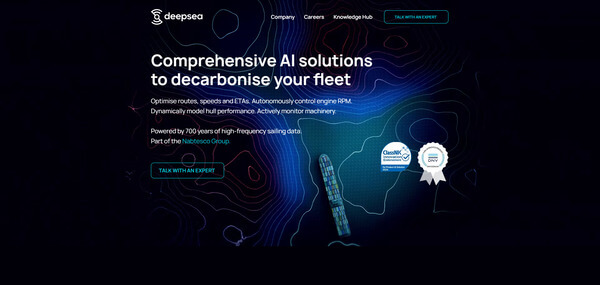
* Image source: DeepSea Official
Website
(https://www.deepsea.ai/)
(https://www.deepsea.ai/)
Core Capabilities
AI Fuel, CII &
Route Optimization
Route Optimization
- With the CII tracking feature, AI helps maintain and predict vessel performance.
- AI dynamically evaluates speeds and routes to suggest more fuel-efficient alternatives
- While complying with Europe-specific restrictions and regulations, it supports operations aimed at lower fuel consumption.
For Fleets with a Mix
of Older and Newly
Built Vessels
For Independent Ship
Management Companies
of Older and Newly
Built Vessels
For Independent Ship
Management Companies
Smart Ship Hub
* Image source: Smart Ship Hub Official
Website
(https://smartshiphub.com/)
(https://smartshiphub.com/)
Core Capabilities
Data integration across a mixed fleet
- Supports aggregation of vessel data across different manufacturers and standards, as well as data from multiple vessels.
- Visualizes information distributed across onboard systems and supports building an environment for centralized management.
- Supports information sharing between shore teams and fleets with older vessels, older equipment, newly built vessels and new equipment.