
Vessel Tide | A Guide to Essential Maritime Data Analytics Systems » Compare Vessel Data Platforms and Fleet Management Solutions » MaSSA-One vs. Kongsberg Vessel Insight: Which Vessel Data Platform Is Right for Your Fleet?
MaSSA-One vs. Kongsberg Vessel Insight: Which Vessel Data Platform Is Right for Your Fleet?
As maritime operations become more data-driven, shipowners, operators, and fleet managers are looking for platforms that can improve visibility, support technical decision-making, and lay the foundation for long-term digital transformation.
Two solutions often considered in this context are MaSSA-One from BEMAC and Kongsberg Vessel Insight from Kongsberg Maritime. Both platforms help organizations make better use of vessel data, but they are built around different operational priorities.
MaSSA-One focuses on onboard data collection, condition monitoring, and troubleshooting support. Kongsberg Vessel Insight, by contrast, is positioned primarily as a vessel-to-cloud data platform for digital integration, information sharing, and future application development.
This comparison reviews the two platforms across five key areas:
- Data infrastructure and connectivity
- Condition monitoring and troubleshooting
- Scalability and long-term digitalization
- Implementation and support services
- Best-fit use cases
At-a-Glance Comparison
| Item | MaSSA-One | Kongsberg Vessel Insight |
|---|---|---|
| Primary Use Case | Data integration, condition monitoring, and troubleshooting | Vessel-to-cloud data platform and digital foundation |
| Core Technology | IoT Data Server | Cloud-based vessel data platform |
| Data Collection | Collects data from a wide range of onboard sensors and equipment | Integrates vessel systems, sensors, and external applications |
| Ship-to-Shore Visibility | Yes | Yes |
| Condition Monitoring | Fairway Alarm and Knowledge Alarm | Data visibility and technical review support |
| Troubleshooting | Supports fault diagnosis and root-cause analysis | Provides a data foundation for analysis and decision-making |
| External Integrations | API integration | Modbus, NMEA, OPC UA, and third-party application integration |
| Scalability | Flexible sensor expansion | Designed for phased digitalization and future applications |
| Support | Onboard engineering and implementation support | 24/7 global support and service agreements |
| Pricing | Available upon request | Available upon request |
This comparison is based on publicly available information as of June 2026. Actual functionality, service scope, and implementation details may vary depending on the selected modules, vessel requirements, and contract terms.
Platform Overview
MaSSA-One
A Scalable Platform for Vessel Data Integration and Troubleshooting
MaSSA-One is a vessel management platform designed to consolidate onboard data and make it accessible to both vessel crews and shore-based teams.
Its key strength lies in combining scalable data collection with practical operational support. Rather than simply collecting data, the platform helps teams monitor vessel conditions, identify abnormalities, and respond more effectively to equipment issues.
The IoT Data Server supports multiple data formats, including:
- CSV
- Modbus
- IEC 61162-1/2
This allows MaSSA-One to collect data from a broad range of onboard equipment, systems, and sensors.
Key Functions
Fairway Alarm
Detects deviations from normal operating patterns based on historical operating data.
Knowledge Alarm
Generates alerts based on predefined operational knowledge and combinations of operating conditions.
Troubleshooting Support
Helps operators investigate failures, identify likely root causes, and plan recovery steps.
API Integration
Enables collected data to be connected with external applications and third-party services.
Kongsberg Vessel Insight
A Vessel-to-Cloud Platform for Long-Term Digital Transformation
Kongsberg Vessel Insight is best viewed as a vessel-to-cloud data platform rather than a conventional vessel management system.
Its main purpose is to create a consistent data environment between ship and shore. By collecting, structuring, sharing, and reusing vessel data, the platform helps organizations support multiple applications, teams, and business functions from a common data foundation.
Key Functions
Centralized Vessel Data Management
Consolidates data from onboard systems, sensors, and equipment into a centralized platform.
Ship-to-Shore Data Visibility
Gives shore-based teams consistent access to vessel and fleet information.
System and Application Integration
Supports interoperability with interfaces such as Modbus, NMEA, and OPC UA.
Data Foundation for Future Applications
Provides a scalable platform for analytics, reporting, and future digital initiatives.
Key Differences
Operational Data Platform vs. Digital Foundation
MaSSA-One
- Flexible onboard data collection
- Sensor and equipment extensibility
- Strong support for troubleshooting workflows
MaSSA-One is well suited for organizations that need both vessel data collection and practical support for day-to-day technical operations.
Kongsberg Vessel Insight
- Vessel-to-cloud architecture
- Fleet-wide data integration
- Support for long-term digital transformation
Kongsberg Vessel Insight is particularly suitable for organizations looking to build a scalable digital foundation for future applications, analytics, and cross-team data sharing.
Condition Monitoring and Troubleshooting
MaSSA-One
- Anomaly detection
- Electrical troubleshooting
- Root-cause analysis
- Recovery support
MaSSA-One provides practical support for equipment failures and operational incidents, making it useful for teams that need to move from data visibility to technical action.
Kongsberg Vessel Insight
- Data visibility
- Technical review support
- Information sharing across teams
- Foundation for operational analysis
Kongsberg Vessel Insight focuses more on enabling data use across the organization than on providing dedicated troubleshooting functions.
Scalability and Long-Term Digitalization
MaSSA-One
MaSSA-One supports scalable sensor integration and API connectivity, allowing organizations to expand how they collect and use operational data over time.
Kongsberg Vessel Insight
Kongsberg Vessel Insight is designed for phased digitalization. Companies can begin with selected vessels or use cases, then expand into broader analytics, reporting, and digital services as their data strategy matures.
Integration and Connectivity
MaSSA-One
MaSSA-One connects with various onboard systems through flexible data collection capabilities and API integration.
Kongsberg Vessel Insight
Kongsberg Vessel Insight places strong emphasis on interoperability with onboard systems and external applications through interfaces such as:
- Modbus
- NMEA
- OPC UA
This makes it a strong option for organizations aiming to build a broader digital ecosystem around vessel data.
Implementation and Support
MaSSA-One
- Engineer dispatch
- Onboard installation support
- Equipment setup and commissioning
BEMAC’s hands-on support model can help simplify deployment and reduce the burden on vessel operators during implementation.
Kongsberg Vessel Insight
- 24/7 global technical support
- Training services
- Service-level agreements
- Long-term support structure
Kongsberg Vessel Insight emphasizes global service availability and ongoing support for long-term digital initiatives.
Which Platform Is the Better Fit?
| If your priority is... | Consider first |
|---|---|
| Building a flexible onboard data platform | MaSSA-One |
| Strengthening troubleshooting capabilities | MaSSA-One |
| Creating a vessel-to-cloud data environment | Kongsberg Vessel Insight |
| Supporting long-term digital transformation | Kongsberg Vessel Insight |
| Integrating with external applications | Kongsberg Vessel Insight |
| Receiving onboard engineering support | MaSSA-One |
Choosing the Right Platform for Your Fleet
MaSSA-One and Kongsberg Vessel Insight both help organizations make better use of vessel data, but they are designed around different priorities.
MaSSA-One is a strong fit for fleets that need practical operational support, condition monitoring, and troubleshooting capabilities. Kongsberg Vessel Insight is better aligned with organizations that want to establish a vessel-to-cloud data environment and build a scalable foundation for future digital services.
Before choosing a platform, organizations should look beyond individual features and consider their digital maturity, operational challenges, integration requirements, and long-term plans for using vessel data.
The right choice depends on whether your organization’s immediate goal is to improve technical operations and troubleshooting or to build a scalable digital ecosystem for future growth.
3 Recommended
Marine Fleet Management Software
Marine Fleet Management Software
For Frequent Hazardous
or Long-Distance
Voyages
For Marine Fleet
Management Companies
or Long-Distance
Voyages
For Marine Fleet
Management Companies
MaSSA-One

* Image source: BEMAC Official
Website
(https://www.massa-one.com/english/)
(https://www.massa-one.com/english/)
Core Capabilities
Condition monitoring and anomaly detection
- Enables early detection of anomalies using data-driven automatic thresholds and expert-defined multi-condition detection.
- In the event of a failure, real-time data helps speed up root-cause identification, reducing downtime.
- This supports the prevention of future accidents and issues, contributing to reduced damage and losses involving vessels and cargo.
For Companies with
Frequent Business
in the EU
For Marine Shipping
Companies
Frequent Business
in the EU
For Marine Shipping
Companies
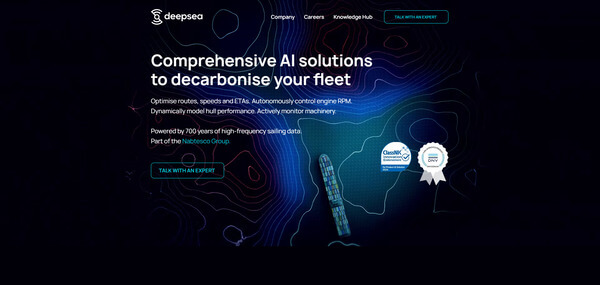
DeepSea
* Image source: DeepSea Official
Website
(https://www.deepsea.ai/)
(https://www.deepsea.ai/)
Core Capabilities
AI Fuel, CII &
Route Optimization
Route Optimization
- With the CII tracking feature, AI helps maintain and predict vessel performance.
- AI dynamically evaluates speeds and routes to suggest more fuel-efficient alternatives
- While complying with Europe-specific restrictions and regulations, it supports operations aimed at lower fuel consumption.
For Fleets with a Mix
of Older and Newly
Built Vessels
For Independent Ship
Management Companies
of Older and Newly
Built Vessels
For Independent Ship
Management Companies
Smart Ship Hub
* Image source: Smart Ship Hub Official
Website
(https://smartshiphub.com/)
(https://smartshiphub.com/)
Core Capabilities
Data integration across a mixed fleet
- Supports aggregation of vessel data across different manufacturers and standards, as well as data from multiple vessels.
- Visualizes information distributed across onboard systems and supports building an environment for centralized management.
- Supports information sharing between shore teams and fleets with older vessels, older equipment, newly built vessels and new equipment.