
Vessel Tide | A Guide to Essential Maritime Data Analytics Systems » Ship Management System Fundamentals » Ship Management System Installation Timeline
Ship Management System Installation Timeline
Index
View All
Installing a ship management or maritime data system is rarely a single task. Depending on scope, it can involve a vessel survey, onboard hardware installation, network and data integration, crew training, commissioning, operational testing, and post-go-live support. A software-only deployment on an already-instrumented vessel can be straightforward. A retrofit that adds new sensors, a data gateway, onboard wiring, and ship-to-shore connectivity takes considerably more planning and coordination.
That distinction matters when you're comparing vendor quotes. A proposal built around a dashboard that runs on existing data and a proposal that adds sensors, a data gateway, and shipboard wiring are not the same project — even when both get called an "installation." This guide walks through the phases involved — survey, hardware and network setup, data integration, crew training, commissioning and operational testing, and post-go-live stabilization — so you can check a vendor's proposed schedule against what each phase actually takes.
Key Takeaways
- Installation time depends far more on the scope of onboard hardware, data collection, integration, and commissioning than on the software dashboard itself. Confirm what type of project you're actually being quoted before comparing timelines.
- A project that adds new sensors, a data gateway, or significant onboard integration can take far longer than a software deployment that runs on existing vessel data. There's no single industry-standard installation period that applies across every vessel or system.
- On-site engineering support can lower commissioning and troubleshooting risk, since issues get caught and fixed during the same vessel visit. It doesn't automatically make every project faster, though.
- Ask for a phase-by-phase schedule in writing, with a responsible party and key dependencies for each step, before you sign. A single end date makes it harder to see where delays are likely to happen.
What "Installation" Actually Covers
The term "ship management system" covers different kinds of maritime software and data infrastructure, and vendors don't always use it the same way. For this guide, installation means implementing a digital system that runs on onboard operational data — which can include vessel-side hardware, data collection, shipboard connectivity, and a shore-side software platform.
The first type is software-focused: the vessel already has the sensors, data sources, and connectivity the platform needs, so implementation mainly means configuring the software, setting up accounts, mapping existing data, and validating the connection. Depending on the system architecture, this can require little or no physical work onboard — though vessel-side testing or access may still be necessary.
The second type is a hardware-and-integration project: the system needs new sensors, a data-collection gateway, additional network equipment, or changes to existing onboard infrastructure. That adds physical work — surveying the vessel, mounting equipment, running cable, connecting it to the onboard network or data infrastructure, and commissioning the new components.
Most fleet projects fall somewhere between the two. Some vessels may already have the instrumentation they need; others may need additional hardware or integration work. Ask which scope applies to each vessel before comparing timelines across proposals — two projects with the same headline duration can involve very different amounts of work.
The Installation Timeline, Phase by Phase
Several phases typically separate a signed contract from a working system on maritime IT and data projects. They don't always happen in strict sequence — software configuration, data mapping, procurement, and other prep work can run in parallel with vessel-side activities. The actual sequence and duration depend on the system architecture, vessel condition, integration scope, vessel availability, and how responsibilities are split.
Vessel Survey and Requirements Assessment
A vendor engineer or other qualified technical representative reviews the vessel's existing sensors, data sources, network and communications infrastructure, available mounting locations, and relevant documentation. The assessment should also pin down what operational data the shore side actually needs and which data sources are already available.
Duration varies considerably by vessel and project scope. A straightforward software deployment on documented existing data may need only a limited vessel-side assessment, while a retrofit touching multiple systems calls for a more detailed technical survey. Where documentation is incomplete, expect additional inspection or testing before the final installation scope can be confirmed.
Hardware Installation and Network Configuration
For vessels that need new sensors, gateways, or other equipment, this phase covers mounting the equipment, installing or modifying cable runs, providing power, connecting it to the appropriate onboard infrastructure, and configuring network or communications interfaces.
Duration is project-specific rather than a fixed industry standard. It depends on the number and type of devices, cable-routing requirements, access to machinery spaces, vessel availability, port restrictions, required permits or work controls, and whether the work fits into a planned port call or needs a longer shipyard period.
Software-focused rollouts that use existing vessel infrastructure need little or none of this physical work.
Data Integration and Platform Configuration
Once the relevant data sources are available, that data needs to be mapped into the platform and validated. Depending on the system, this can include configuring dashboards, alarms, reports, user permissions, data tags, units, timestamps, and other parameters.
Data reaching the platform isn't the same as usable data. Integration testing should confirm that the right data is coming through, that values and units are interpreted correctly, that timestamps line up, and that missing, duplicated, or abnormal data is handled the way it's supposed to be.
Much of this can run in parallel with onboard hardware installation, particularly on a fleet rollout. The schedule depends on the availability and quality of source data, interface specifications, data mapping requirements, and how responsibilities are split between the vendor and the vessel or shore-side teams.
Crew and Shore Staff Training
Training needs depend on how the system is used. Crew may need training on data entry, system interfaces, alarms, or equipment checks; shore staff may need it on dashboards, reports, alerts, data quality, and admin functions.
For systems that collect data automatically, crew members may not need to log operational data by hand. In those cases, training should focus on how crew interact with the equipment and system, how to recognize data or equipment problems, and what to escalate to shore staff or technical support.
Training can be scheduled around vessel duty rotations and operational constraints. On a fleet deployment, the first vessel also provides an opportunity to identify training gaps before the system rolls out more widely.
Commissioning, Operational Testing, and Go-Live
Commissioning verifies that the installed equipment and configured software operate as intended. Depending on the system, testing might happen alongside normal vessel operations, at the dock, during a sea trial, or some combination of the three.
Where vessel-side sensors or integrations need operational validation, testing at sea helps confirm that equipment, data collection, communications, and configuration hold up under real operating conditions. Not every ship management or maritime software deployment needs a formal sea trial, though — the right testing method should be defined in the project scope and commissioning plan.
Any installation or configuration issues found during testing should be assigned to a responsible party and resolved before the system is considered fully operational — so problems don't surface only after the vessel is back in normal service.
Post-Go-Live Stabilization
The period right after go-live is typically used to monitor data quality, user adoption, system behavior, and support needs. Depending on the system, that can mean adjusting alarm settings, refining reports or dashboards, resolving data-mapping issues, or correcting problems with sensors and other equipment.
There's no universal 60- or 90-day stabilization window — the right length depends on the vendor's service model, the complexity of the deployment, and what's agreed in the contract. When comparing proposals, confirm what post-go-live support is included and how data-quality or hardware issues are handled.
On-Site vs. Remote Installation: How They Affect the Timeline
For projects with physical vessel-side work, having on-site engineering support can affect commissioning risk and how many follow-up visits are needed.
When a vendor sends an engineer to the vessel for installation or commissioning, some issues get caught and fixed on the same visit. A wrong connection, a configuration problem, or a sensor installation issue is often easier to diagnose when someone can inspect the equipment directly.
With a remote-supported installation, the physical work instead falls to the crew, the shipyard, or a local contractor working from the vendor's documentation. That can work well for straightforward jobs, but responsibility for the installation and troubleshooting should be clearly defined before work starts.
Neither approach is automatically faster. An on-site engineer can lower certain troubleshooting risks, but travel, vessel access, and scheduling add their own constraints. A remote installation can be efficient on a well-defined project, but it can need extra coordination if the physical work doesn't match the expected configuration.
When comparing quotes, ask not just how long installation is expected to take, but who is physically doing the hardware work, who's responsible for commissioning, and what happens if an installation problem turns up.
What Extends or Shortens the Timeline
A handful of variables affect the schedule — and they often matter more than the vendor's headline installation estimate.
Fleet size and rollout order matter, since coordinating hardware teams, training sessions, vessel access, and go-live dates across multiple vessels adds scheduling and project-management overhead. That said, a fleet rollout tends to get faster after the first vessel, once the same configuration, documentation, training approach, and installation procedure can be reused.
Retrofit versus newbuild is another major factor. A newbuild can have sensors, network infrastructure, power supplies, and cable routes designed in from the start. A retrofit has to work around existing equipment, cable routes, network architecture, access arrangements, and operational schedules.
Existing ship-to-shore connectivity affects implementation too. The question isn't simply whether a vessel has VSAT, but whether the available infrastructure provides the bandwidth, reliability, latency, and data-routing the system needs. Some systems also use other satellite or terrestrial connectivity, depending on the vessel and operating area.
The number and type of data sources affects both hardware and integration work. A system pulling from a small number of existing data points may need only limited configuration, while one collecting from multiple onboard systems and sensors needs more extensive mapping, testing, and validation.
Cybersecurity and IT/OT considerations can affect the project as well. Connecting new equipment to onboard networks may call for a review of network architecture, access controls, remote-access arrangements, software configuration, and the owner's or operator's cybersecurity requirements. On applicable newbuild projects, relevant class and industry requirements should factor into system design and implementation too.
Questions to Ask Before You Commit to a Timeline
- What exactly is included in the installation scope — software configuration, sensors, gateway equipment, wiring, network configuration, or all of the above?
- Who is responsible for the onboard survey, physical installation, network configuration, and commissioning?
- Does the installation require access to machinery spaces, additional power supplies, cable runs, or modifications to existing onboard infrastructure?
- What testing happens before go-live — dockside commissioning, a sea trial, or both?
- If testing turns up a wiring, sensor, communications, or configuration issue, is the follow-up work included in the quote or billed separately?
- How long from signing until the first vessel is sending validated, usable data — not just until the hardware is installed?
- If this rolls out across a fleet, which activities can be reused or run in parallel after the first vessel?
- What ship-to-shore connectivity does the system require, and does the vessel's existing communications infrastructure meet it?
- What cybersecurity, IT/OT, class, owner, or operator requirements need to be addressed before the system is connected to the vessel's network?
- What support is available after go-live if there are issues with crew adoption, data quality, equipment, or integration?
Using This Timeline to Compare Vendor Proposals
A vendor's proposal is easiest to evaluate when it's broken into the main phases, with a responsible party, key dependencies, and an estimated duration for each one. A single end date — "installation complete in eight weeks" — makes it hard to see which activities are actually driving the schedule, or where a delay is likely to show up.
Whether you call it an installation project, a vessel software deployment, or a maritime data-system implementation, the scope can vary a lot from one vessel to the next. Some projects mainly configure existing data and software; others involve sensors, gateways, networks, connectivity, commissioning, and operational testing.
So the most useful comparison isn't which vendor promises the shortest headline timeline — it's the scope, dependencies, responsibilities, testing requirements, and post-go-live support behind that timeline. That's what tells you whether a proposed go-live date is realistic for your vessels.
POINT
Find the Right System for Your Data Strategy
This site introduces vessel management systems by technical focus, including solutions that help reduce the risk of unexpected downtime and equipment damage, tools that support data-driven analysis of fuel use, CII status, and voyage planning, and platforms that bring fragmented fleet data together in one place.
[Advertisement]
3 Recommended
Marine Fleet Management Software
3 Recommended
Marine Fleet Management Software
Advertiser Disclosure:
We receive compensation from some of the companies listed below.This compensation may affect which companies are included and the order in which they appear.
For Frequent Hazardous
or Long-Distance
Voyages
For Marine Fleet
Management Companies
or Long-Distance
Voyages
For Marine Fleet
Management Companies
MaSSA-One

* Image source: BEMAC Official
Website
(https://www.massa-one.com/english/)
(https://www.massa-one.com/english/)
Core Capabilities
Condition monitoring and anomaly detection
- Enables early detection of anomalies using data-driven automatic thresholds and expert-defined multi-condition detection.
- In the event of a failure, real-time data helps speed up root-cause identification, reducing downtime.
- This supports the prevention of future accidents and issues, contributing to reduced damage and losses involving vessels and cargo.
For Companies with
Frequent Business
in the EU
For Marine Shipping
Companies
Frequent Business
in the EU
For Marine Shipping
Companies
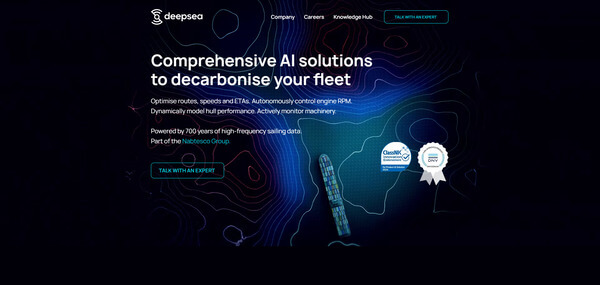
DeepSea
* Image source: DeepSea Official
Website
(https://www.deepsea.ai/)
(https://www.deepsea.ai/)
Core Capabilities
AI Fuel, CII &
Route Optimization
Route Optimization
- With the CII tracking feature, AI helps maintain and predict vessel performance.
- AI dynamically evaluates speeds and routes to suggest more fuel-efficient alternatives
- While complying with Europe-specific restrictions and regulations, it supports operations aimed at lower fuel consumption.
For Fleets with a Mix
of Older and Newly
Built Vessels
For Independent Ship
Management Companies
of Older and Newly
Built Vessels
For Independent Ship
Management Companies
Smart Ship Hub
* Image source: Smart Ship Hub Official
Website
(https://smartshiphub.com/)
(https://smartshiphub.com/)
Core Capabilities
Data integration across a mixed fleet
- Supports aggregation of vessel data across different manufacturers and standards, as well as data from multiple vessels.
- Visualizes information distributed across onboard systems and supports building an environment for centralized management.
- Supports information sharing between shore teams and fleets with older vessels, older equipment, newly built vessels and new equipment.