
Vessel Tide | A Guide to Essential Maritime Data Analytics Systems » Ship Management System Fundamentals » Retrofit vs Newbuild: How to Install a Ship Management System on an Existing Fleet
Retrofit vs Newbuild: How to Install a Ship Management System on an Existing Fleet
Index
View All
A ship management or monitoring system does not necessarily require a newbuild slot. Many existing vessels already have some of the electrical, instrumentation, and communication infrastructure that a monitoring system can use. The key question is not simply whether a vessel is old enough to qualify, but whether its existing infrastructure can be safely, reliably, and compliantly reused for the intended system.
For an owner or manager comparing options before signing, that distinction changes the shortlist. A system designed primarily around a standardized newbuild installation may require more vessel-specific engineering when deployed on an existing ship. A retrofit-oriented solution, by contrast, is designed to assess and work with the vessel's existing wiring, sensors, interfaces, and onboard equipment wherever technically and economically appropriate.
Key Takeaways
- Retrofit feasibility is vessel-specific. Vessel age alone should not be treated as a disqualifier, but equipment condition, documentation, available capacity, interfaces, and applicable class and statutory requirements all need to be assessed.
- Engineering and installation effort can be a major cost driver. The balance between hardware, cabling, integration, engineering, commissioning, software, and support varies by vessel and project scope.
- Existing equipment, interfaces, and protocols can create integration challenges. Before comparing dashboard features, confirm what signals and protocols the system can actually acquire from the equipment already installed on board.
- Reuse is possible when existing equipment and interfaces are suitable. If additional sensors, gateways, wiring, or other hardware are required, those costs should be identified during the technical survey rather than after the contract is signed.
Retrofit vs. Newbuild: What Changes?
A newbuild allows the owner, shipyard, equipment suppliers, and system integrators to coordinate system requirements during the vessel's design and construction process. A retrofit starts with a vessel that has already been designed and commissioned, so the new system has to work within existing electrical, instrumentation, communication, and physical constraints.
That difference can affect several parts of the installation. New cabling may have to follow existing routes rather than a dedicated installation plan. Additional electrical loads may require checks of available power supply capacity, protection, distribution arrangements, and, where applicable, UPS or redundancy requirements. New data signals may also require spare I/O, gateway capacity, network capacity, or protocol conversion rather than simply being connected to an available sensor.
The existing documentation matters as well. Drawings, wiring diagrams, equipment lists, network information, and sensor documentation can significantly reduce the amount of engineering required. Where documentation is incomplete or does not match the vessel's current configuration, an onboard survey becomes more important.
None of this rules retrofit out. It means the installation plan should be based on the actual vessel rather than a standard equipment list.
Technical Feasibility Checklist Before Retrofitting a Ship Management or Monitoring System
Before comparing vendors, an owner or ship manager should establish the technical scope on the actual vessel. The exact checks will depend on the system being installed, but the following areas are typically important.
- Power and installation capacity: Is there suitable capacity and physical space for the additional equipment, and are the power supply and protection arrangements appropriate for the installation?
- Sensor and signal inventory: Which parameters are already measured, what equipment measures them, and what signal types, interfaces, protocols, update rates, and data access methods are available?
- Cabling and physical routing: Can existing routes be reused, or will new signal or power cables be required? If new routing is necessary, what additional penetrations, installation work, or approval requirements may apply?
- Onboard network and ship-to-shore connectivity: What onboard networks are available, how will data be transferred, and does the system support the required data frequency and transmission model?
- Class, flag, and statutory requirements: Does the proposed alteration require class review, survey, notification, or other approval, and are there applicable flag-state or statutory requirements?
- Cybersecurity: If the system connects to onboard networks or provides ship-to-shore connectivity, how will access control, segmentation, remote access, software updates, and other cyber risks be managed?
Requirements can vary depending on what the new system does and how it interfaces with existing shipboard systems. For example, a standalone monitoring or data-logging installation may have different approval implications from a system integrated into safety-critical control or monitoring functions. IACS currently maintains requirements for computer-based systems, while classification societies such as DNV provide processes for approval of alterations on vessels in operation.
A vendor that investigates these factors before issuing a vessel-specific quotation is better positioned to define the installation scope and flag potential changes before work begins.
Why On-Site Engineering and Installation Coordination Matter for Retrofit Projects
A retrofit project benefits from confirming the actual vessel configuration before installation begins. Documentation may not always fully reflect later modifications, replacement equipment, or changes made during previous maintenance periods.
A vendor may perform the survey and installation directly, or may work with a shipyard, electrical contractor, or other qualified installation partner. The important issue is not simply whether the vendor's own employees perform every physical task. It is whether responsibility for the survey, engineering, installation, commissioning, documentation, and subsequent support is clearly defined.
This is particularly important when the actual vessel differs from the original installation plan. A clearly defined responsibility structure can reduce coordination problems, unexpected scope changes, and rework.
The same principle applies after commissioning. If a sensor reading is incorrect or a connection fails later, troubleshooting is easier when the vessel-specific installation, signal paths, configuration, and changes are properly documented and supported.
Connecting Legacy Equipment Without Replacing Everything
An existing fleet may contain equipment from different manufacturers and different generations. Two vessels in the same fleet can therefore expose similar measurements through different sensors, signal types, communication protocols, or legacy interfaces.
This is where the system's data-acquisition and integration layer matters. A platform that supports only a limited set of sensors or interfaces may require additional gateways, protocol converters, new sensors, or other hardware to obtain the required data. By contrast, a system designed to integrate a range of existing interfaces can allow suitable equipment to be reused where the required data can be accessed reliably.
However, an "open" or "extensible" data-collection architecture should not be interpreted as universal compatibility. Compatibility still depends on the actual signal type, electrical interface, protocol, data mapping, update frequency, gateway support, and documented integration capability.
For a mixed-age fleet, this distinction can materially affect the cost and pace of fleet-wide deployment. A well-defined integration strategy can allow owners to upgrade vessels progressively instead of requiring wholesale replacement of functioning equipment.
Retrofit Cost and Timeline: What to Expect
There is no reliable single retrofit price based only on vessel count. Project cost depends on the technical scope of each vessel as well as the vendor's hardware, software, licensing, engineering, installation, commissioning, and support model.
Typical cost variables can include:
- additional sensors or replacement sensors;
- data-acquisition hardware and protocol gateways;
- switchboard or cabinet modifications;
- new power and signal cabling;
- installation and commissioning;
- network and ship-to-shore connectivity requirements;
- engineering and documentation;
- class or statutory work where applicable; and
- software licenses, cloud services, maintenance, and ongoing support.
Installation timing follows a similar pattern. A relatively limited installation may be possible during a planned port call if sufficient access and working time are available. A project involving extensive cabling, cabinet modifications, equipment replacement, or additional approval and survey work may require a longer port stay or a scheduled yard period.
The exact installation window should therefore be confirmed during the technical survey and project planning process rather than assumed from a standard sales quotation.
This article focuses on retrofit-specific cost drivers. For a full breakdown of pricing models across vendors, see How Much Does a Ship Management System Cost?
When Newbuild or Major Refit May Still Make More Sense
Retrofit is not automatically the best option for every vessel. If a vessel is already approaching planned retirement or replacement, the remaining service period may be too short to justify a large installation investment.
The same consideration applies when a vessel is already scheduled for a major electrical or automation modernization. In that situation, integrating the monitoring system into the broader project may avoid duplicating engineering, cabling, cabinet work, or commissioning activities.
That economic calculation should take into account the vessel's remaining service life and expected return on investment, but those are not the only factors. Regulatory requirements, operational priorities, equipment condition, data requirements, cybersecurity, planned maintenance, and the owner's fleet-wide digitalization strategy may also affect the decision.
For some vessels, a phased retrofit can be more appropriate than either a complete system replacement or waiting for a newbuild. The right approach depends on the scope and condition of the individual vessel.
Retrofit and Compliance: What Owners Should Check
A monitoring or data-collection system should not be treated as automatically equivalent to a regulatory compliance system. For example, IMO's Data Collection System (DCS) requires ships of 5,000 gross tonnage and above to collect and report specified fuel oil consumption and related data. Since 2023, IMO DCS data has also been used in the calculation of a ship's operational Carbon Intensity Indicator (CII).
A commercial monitoring platform may support the collection and analysis of data relevant to these requirements, but installing such a platform does not by itself establish compliance. Owners should confirm that the system, data sources, calculation methodology, verification process, and reporting workflow meet the applicable regulatory requirements.
The same principle applies to cyber risk. IMO Resolution MSC.428(98) states that an approved Safety Management System should take cyber risk management into account within the objectives and functional requirements of the ISM Code.
Where a retrofit connects new equipment to onboard networks or enables remote access, cybersecurity should therefore be considered as part of the system architecture and project scope rather than treated solely as an IT issue.
How to Compare Retrofit Vendors
Feature lists alone are not enough when comparing retrofit solutions. Owners and managers should ask vendors to demonstrate how their system will work with the actual vessel configuration.
- Pre-installation survey: Does the vendor assess the vessel before finalizing the installation scope?
- Existing equipment integration: Which sensor brands, signal types, protocols, and interfaces can the system support?
- Installation responsibility: Who is responsible for installation, commissioning, testing, and documentation?
- Change management: How are unexpected wiring, equipment, or configuration differences handled?
- Class and statutory support: Who identifies and manages applicable class, flag-state, and statutory requirements?
- Cybersecurity: How are onboard network connections, remote access, authentication, updates, and data transfers protected?
- Long-term support: Who supports the vessel when hardware, sensors, or communications fail after commissioning?
These questions provide a more meaningful basis for comparison than the number of dashboard features alone.
When Retrofit Is the Right Approach
For many existing vessels, retrofit can be a practical way to introduce monitoring and data-collection capabilities without waiting for a newbuild. The feasibility, however, should be established from the vessel's actual configuration rather than assumed from vessel age or fleet size.
A successful retrofit typically starts with a vessel-specific survey and a clear definition of the required data. The project then needs to account for existing sensors and interfaces, power and cabling, network architecture, installation and commissioning, applicable class and statutory requirements, cybersecurity, and long-term support.
The key question for an owner is therefore not simply whether a vendor offers a retrofit package. It is whether that vendor can demonstrate how the proposed system will integrate with the equipment already on the vessel, what additional hardware or engineering is required, who is responsible for the installation and commissioning, and what the total project scope will be before work begins.
Summary
Existing vessels do not need to be treated as unsuitable simply because they were not designed around a modern monitoring platform. In many cases, suitable existing sensors, wiring, interfaces, and communication infrastructure can be reused. The extent of that reuse must be established through a vessel-specific technical assessment.
Before shortlisting a vendor, confirm at least these areas: whether the vendor surveys the actual vessel before finalizing the scope, whether its data-acquisition layer supports the signals and interfaces already installed, how installation and commissioning responsibilities are divided, what class and statutory requirements apply, how cybersecurity is addressed, and what additional hardware or engineering may be required.
Those answers provide a much stronger basis for evaluating retrofit feasibility and total project cost than a feature list or a standard per-vessel quotation.
POINT
Find the Right System for Your Data Strategy
This site introduces vessel management systems by technical focus, including solutions that help reduce the risk of unexpected downtime and equipment damage, tools that support data-driven analysis of fuel use, CII status, and voyage planning, and platforms that bring fragmented fleet data together in one place.
[Advertisement]
3 Recommended
Marine Fleet Management Software
3 Recommended
Marine Fleet Management Software
Advertiser Disclosure:
We receive compensation from some of the companies listed below.This compensation may affect which companies are included and the order in which they appear.
For Frequent Hazardous
or Long-Distance
Voyages
For Marine Fleet
Management Companies
or Long-Distance
Voyages
For Marine Fleet
Management Companies
MaSSA-One

* Image source: BEMAC Official
Website
(https://www.massa-one.com/english/)
(https://www.massa-one.com/english/)
Core Capabilities
Condition monitoring and anomaly detection
- Enables early detection of anomalies using data-driven automatic thresholds and expert-defined multi-condition detection.
- In the event of a failure, real-time data helps speed up root-cause identification, reducing downtime.
- This supports the prevention of future accidents and issues, contributing to reduced damage and losses involving vessels and cargo.
For Companies with
Frequent Business
in the EU
For Marine Shipping
Companies
Frequent Business
in the EU
For Marine Shipping
Companies
DeepSea

* Image source: DeepSea Official
Website
(https://www.deepsea.ai/)
(https://www.deepsea.ai/)
Core Capabilities
AI Fuel, CII &
Route Optimization
Route Optimization
- With the CII tracking feature, AI helps maintain and predict vessel performance.
- AI dynamically evaluates speeds and routes to suggest more fuel-efficient alternatives
- While complying with Europe-specific restrictions and regulations, it supports operations aimed at lower fuel consumption.
For Fleets with a Mix
of Older and Newly
Built Vessels
For Independent Ship
Management Companies
of Older and Newly
Built Vessels
For Independent Ship
Management Companies
Smart Ship Hub
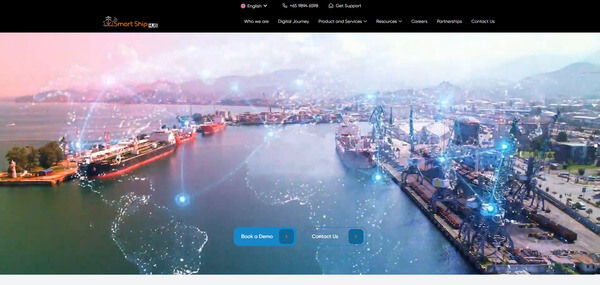
* Image source: Smart Ship Hub Official
Website
(https://smartshiphub.com/)
(https://smartshiphub.com/)
Core Capabilities
Data integration across a mixed fleet
- Supports aggregation of vessel data across different manufacturers and standards, as well as data from multiple vessels.
- Visualizes information distributed across onboard systems and supports building an environment for centralized management.
- Supports information sharing between shore teams and fleets with older vessels, older equipment, newly built vessels and new equipment.