
Vessel Tide | A Guide to Essential Maritime Data Analytics Systems » List of Marine Fleet Management Software Providers » NAPA Fleet Intelligence
NAPA Fleet Intelligence
NAPA Fleet Intelligence is a cloud-based platform that connects ship and shore in real time, turning operational, compliance, and safety data into decisions that shore teams can act on. It collects data from sources such as onboard engine data loggers and voyage data recorders (VDR), then gives shore-based teams a live view of each vessel.
This webpage summarizes what NAPA Fleet Intelligence does, its core modules, its regulatory coverage, and how to judge whether it fits your fleet.
What You Will Learn
on This Webpage
- Strengths of the tool:
It is built on the NAPA Performance Model, which combines 3D hull-form design, hydrodynamics, and real operational data to estimate vessel performance. - What implementation enables:
Fleet monitoring, regulatory reporting, nautical safety, voyage optimization, and analytics sit in one modular platform, so shore teams manage performance, compliance, and decarbonization from a single source. - Best-fit companies:
It suits shipowners, charterers, and ship managers running merchant fleets that need to monitor performance, automate emissions reporting, and reduce fuel use across many vessels.
Key Features of NAPA Fleet Intelligence
A Performance Model Built on
Ship-Design Engineering,
Not Sensor Data Alone
At the core of NAPA Fleet Intelligence is the NAPA Performance Model, which combines 3D hull-form design, hydrodynamics, and real-world operational data to estimate how each vessel performs. NAPA states that this approach delivers the most accurate ship performance insights available in the industry.
For shore teams, this means a performance baseline grounded in naval architecture, not just raw sensor readings. It gives a clearer basis for judging whether a change in fuel consumption reflects operating conditions or the vessel's underlying efficiency, and for checking whether expected fuel savings actually materialize.
A Shore-Side Platform for Owners,
Charterers, and Managers
NAPA Fleet Intelligence fits organizations that need to strengthen shore-side oversight across a fleet.
It integrates AIS, noon report, and high-frequency Signal (sensor) data, so it works whether a vessel sends only noon reports or a full sensor stream. A mixed fleet with varying levels of onboard instrumentation can therefore be monitored on one platform.
POINT
Finding the Ideal
Solution for
Your Organization
Solution for
Your Organization
The core focus of each system differs. Finding the right fit starts with your fleet's management goals and operational scale. To make the choice easier, we have grouped leading vessel management software by company type. Explore our recommendations to find the ideal fit for your organization.
Main Functions of NAPA Fleet Intelligence
NAPA Fleet Intelligence is modular. The five groups below can be combined to match a fleet's data sources and management goals.
Fleet Monitoring
Shore teams see fleet-wide status, including position, operations, and performance, in a single view built on AIS, noon, and Signal data. Modules here include Fleet View, Technical Performance, Performance Table, and Voyage Overview.
Regulatory Compliance
Reporting for EU MRV, IMO DCS, CII, and FuelEU Maritime is automated through modules such as Emission Compliance and Regulatory Reporting, which reduces the manual work of compiling data for environmental reporting.
Nautical Safety
Navigational Risk Monitoring tracks risks along the route so shore teams can act before a situation escalates, from routine navigation through to emergencies.
Planning and Optimization
NAPA Voyage Optimization proposes routes and speed profiles aimed at lower fuel use and emissions, working alongside Technical Performance and Emission Compliance to connect planning with regulatory targets such as CII.
Analysis and Insights
Modules such as Technical Performance, Performance Table, and Charter Party feed into configurable dashboards and KPIs, turning collected data into analysis for strategy and operational review.
Scalability of NAPA Fleet Intelligence
Because the platform is modular and integrates AIS, noon report, and Signal (sensor) data, a fleet can start with basic noon-report monitoring and add sensor-based modules as instrumentation improves, without switching platforms.
It also connects with external services. NAPA Fleet Intelligence modules are offered through the ClassNK ZETA platform, and NAPA works with partners including Furuno, ChartWorld, and Veracity by DNV. These connections let the platform fit into a fleet's existing onboard and onshore systems rather than replacing them.
Regulatory Compliance of NAPA Fleet Intelligence
NAPA Fleet Intelligence automates reporting for the main maritime environmental regimes, including EU MRV, IMO DCS, CII, and FuelEU Maritime, so emissions data is aggregated and submitted with less manual effort.
On the data-platform side, NAPA has stated it is the first service provider for the Ship Data Center's IoS Open Platform *1. For organizations standardizing on industry-wide data platforms, this reduces the work of moving performance and emissions data between systems.
*1 Source: NAPA Official Website (https://www.napa.fi/ )
Implementation Costs and Pricing of NAPA Fleet Intelligence
NAPA does not publish initial fees or subscription pricing. Because the platform is modular, cost depends on which modules and how many vessels are in scope, so pricing is arranged directly with NAPA. Contact the company or book a demo through the official website for a quote.
Examples of Utilizing
NAPA Fleet Intelligence
NAPA publishes customer results that show how the platform is used in practice.
On one Suez-to-China voyage, NAPA reports that Lila Global saved fuel and time and cut CO₂ emissions by 106 tons using NAPA Voyage Optimization *1. NAPA has also reported that Marubeni adopted NAPA Fleet Intelligence and NAPA Voyage Optimization to improve voyage efficiency and support decarbonization *2.
Across both cases, the reported gains came from acting on route and performance data in real time, rather than reviewing it after the voyage, turning monitoring into measurable fuel and emissions savings.
*1 Source: NAPA Official Website (https://www.napa.fi/ )
*2 Source: NAPA Official Website (https://www.napa.fi/ )
Support and Follow-up for NAPA Fleet Intelligence
NAPA operates a worldwide customer service network and offers support and training for its ship-operations software, with regional offices spanning Europe, Asia, and the Americas, including Finland, Japan, Singapore, and the US.
Before implementation, confirm the specific support hours, response scope, and any service-level terms directly with NAPA, as these are arranged per contract.
Company Overview of NAPA
- Company name: NAPA Group (Napa Ltd)
- Address: HTC Helsinki, Pinta, Tammasaarenkatu 3, FI-00180 Helsinki, Finland
- Phone number: +358 9 22 8131
- Email: sales@napa.fi
- Official website: https://www.napa.fi/
3 Recommended
Marine Fleet Management Software
Marine Fleet Management Software
For Frequent Hazardous
or Long-Distance
Voyages
For Marine Fleet
Management Companies
or Long-Distance
Voyages
For Marine Fleet
Management Companies
MaSSA-One

* Image source: BEMAC Official
Website
(https://www.massa-one.com/english/)
(https://www.massa-one.com/english/)
Core Capabilities
Condition monitoring and anomaly detection
- Enables early detection of anomalies using data-driven automatic thresholds and expert-defined multi-condition detection.
- In the event of a failure, real-time data helps speed up root-cause identification, reducing downtime.
- This supports the prevention of future accidents and issues, contributing to reduced damage and losses involving vessels and cargo.
For Companies with
Frequent Business
in the EU
For Marine Shipping
Companies
Frequent Business
in the EU
For Marine Shipping
Companies
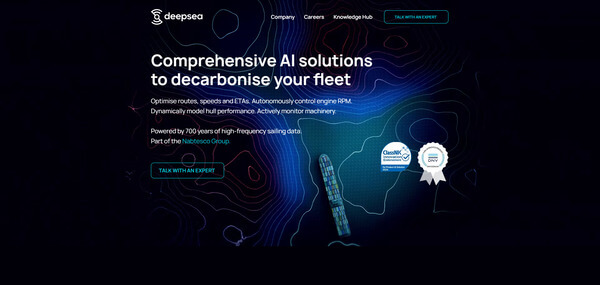
DeepSea
* Image source: DeepSea Official
Website
(https://www.deepsea.ai/)
(https://www.deepsea.ai/)
Core Capabilities
AI Fuel, CII &
Route Optimization
Route Optimization
- With the CII tracking feature, AI helps maintain and predict vessel performance.
- AI dynamically evaluates speeds and routes to suggest more fuel-efficient alternatives
- While complying with Europe-specific restrictions and regulations, it supports operations aimed at lower fuel consumption.
For Fleets with a Mix
of Older and Newly
Built Vessels
For Independent Ship
Management Companies
of Older and Newly
Built Vessels
For Independent Ship
Management Companies
Smart Ship Hub
* Image source: Smart Ship Hub Official
Website
(https://smartshiphub.com/)
(https://smartshiphub.com/)
Core Capabilities
Data integration across a mixed fleet
- Supports aggregation of vessel data across different manufacturers and standards, as well as data from multiple vessels.
- Visualizes information distributed across onboard systems and supports building an environment for centralized management.
- Supports information sharing between shore teams and fleets with older vessels, older equipment, newly built vessels and new equipment.