
Vessel Tide | A Guide to Essential Maritime Data Analytics Systems » What Is Vessel Management Software? How to Choose » Driving Maritime Digital Transformation with Vessel Management Systems
Driving Maritime Digital Transformation with Vessel Management Systems
Index
View All
The shipping industry is currently undergoing a major digital transformation (DX). Today, it is no longer enough to simply collect data; companies must actively utilize it through smart systems. This article explains the critical role of vessel management systems in streamlining complex fleet and crew management operations.
What Is Digital Transformation (DX) in the Maritime Industry?
Digital transformation (DX) in the maritime industry goes far beyond simply turning paper documents into digital files. It represents a fundamental shift that leverages AI (Artificial Intelligence) and vast amounts of accumulated data to optimize operations and enable smarter decision-making.
Specifically, it relies on a common framework for gathering and interpreting data, powered by technologies like machine learning. This allows maritime professionals to move away from relying solely on rules of thumb, supporting more accurate, data-driven decision-making that make the entire sector smarter and more sustainable.
Why Is Maritime DX So Important Today?
Why is DX urgently needed in the shipping industry right now? The answer lies in its ability to solve two of the most pressing challenges facing the industry today: improving maritime safety and reducing environmental impact.
By adopting proactive, forward-looking systems powered by AI, operators can better anticipate operational conditions and potential risks. This can help reduce accidents and help the industry meet global demands for lower emissions.
Ensuring Safe Navigation and Reducing Accidents
A primary goal of maritime DX is accident reduction. By utilizing real-time data and AI-driven proactive systems, operators can accurately predict upcoming maritime traffic conditions. This supports safer, preemptive decision-making, which helps reduce the risk of accidents at sea.
Addressing Environmental Impact and Lowering CO2 Emissions
Reducing environmental impact is essential for sustainable operations. By using digital technology to calculate the most efficient routes and optimal port arrival times (time slots), vessels can avoid unnecessary idling. This helps reduce unnecessary fuel consumption and significantly lowers greenhouse gas emissions.
How Vessel Management Systems Bring Maritime DX to Life
Implementing a comprehensive ship management system is one of the most effective ways to drive maritime DX. These systems centralize and digitize a wide range of daily operations—from crew management to fleet tracking and procurement.
Digitizing Seafarer Labor and Report Management
Vessel management systems can visualize complex working and resting hours in real-time, eliminating the burden of manual calculations. Equipped with features that automatically generate record books compliant with labor regulations, such as applicable maritime labor regulations, these systems provide robust support for legal compliance. Furthermore, digitizing logbooks and movement reports reduces the administrative workload and makes information sharing more efficient.
Streamlining Fleet Management with AIS Data
By integrating AIS (Automatic Identification System) data, ship locations can be monitored continuously. This enables operators to accumulate historical voyage data, which in turn supports better vessel allocation planning. Ultimately, this streamlines daily tracking tasks and improves the overall accuracy of fleet management.
Connecting Ship and Shore via Procurement and Chat Tools
These systems centralize the entire procurement process—from managing ship supply inventories to placing orders—preventing both overstocking and critical shortages. Additionally, built-in business chat functions accelerate communication between the vessel and the onshore team, supporting more effective collaboration.
Conclusion
As digitalization continues to reshape the maritime industry, vessel management systems are becoming a key foundation for more efficient and sustainable operations. Companies should consider implementing these systems to improve operational efficiency while supporting regulatory compliance. A well-suited ship management system can help address operational challenges while strengthening long-term competitiveness.
POINT
Find the Right System for Your Data Strategy
This site introduces vessel management systems by technical focus, including solutions that help reduce the risk of unexpected downtime and equipment damage, tools that support data-driven analysis of fuel consumption, CII performance, and voyage planning, and platforms that bring fragmented fleet data together in one place.
3 Recommended
Marine Fleet Management Software
Marine Fleet Management Software
For Frequent Hazardous
or Long-Distance
Voyages
For Marine Fleet
Management Companies
or Long-Distance
Voyages
For Marine Fleet
Management Companies
MaSSA-One

* Image source: BEMAC Official
Website
(https://www.massa-one.com/english/)
(https://www.massa-one.com/english/)
Core Capabilities
Condition monitoring and anomaly detection
- Enables early detection of anomalies using data-driven automatic thresholds and expert-defined multi-condition detection.
- In the event of a failure, real-time data helps speed up root-cause identification, reducing downtime.
- This supports the prevention of future accidents and issues, contributing to reduced damage and losses involving vessels and cargo.
For Companies with
Frequent Business
in the EU
For Marine Shipping
Companies
Frequent Business
in the EU
For Marine Shipping
Companies
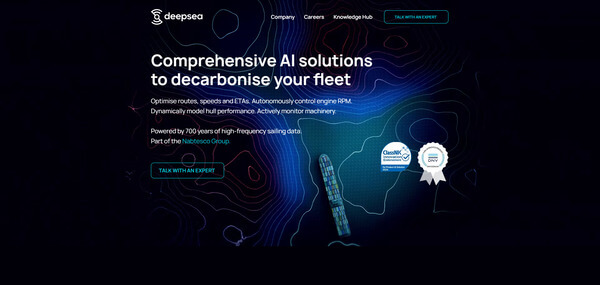
DeepSea
* Image source: DeepSea Official
Website
(https://www.deepsea.ai/)
(https://www.deepsea.ai/)
Core Capabilities
AI Fuel, CII &
Route Optimization
Route Optimization
- With the CII tracking feature, AI helps maintain and predict vessel performance.
- AI dynamically evaluates speeds and routes to suggest more fuel-efficient alternatives
- While complying with Europe-specific restrictions and regulations, it supports operations aimed at lower fuel consumption.
For Fleets with a Mix
of Older and Newly
Built Vessels
For Independent Ship
Management Companies
of Older and Newly
Built Vessels
For Independent Ship
Management Companies
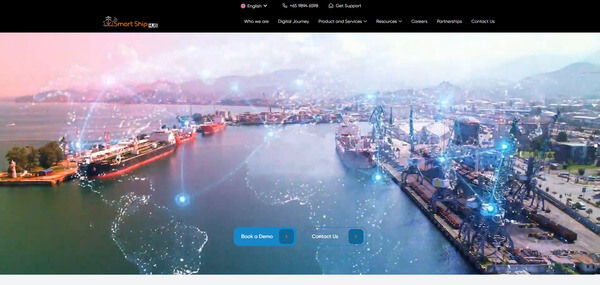
Smart Ship Hub
* Image source: Smart Ship Hub Official
Website
(https://smartshiphub.com/)
(https://smartshiphub.com/)
Core Capabilities
Data integration across a mixed fleet
- Supports aggregation of vessel data across different manufacturers and standards, as well as data from multiple vessels.
- Visualizes information distributed across onboard systems and supports building an environment for centralized management.
- Supports information sharing between shore teams and fleets with older vessels, older equipment, newly built vessels and new equipment.