
Vessel Tide | A Guide to Essential Maritime Data Analytics Systems » What Is Vessel Management Software? How to Choose » Voyage Data Analytics for Marine Fleet Management
Voyage Data Analytics for Marine Fleet Management
Index
View All
Voyage data analytics is an approach that uses data collected from AIS, weather forecasts, and historical routes to optimize vessel navigation, safety, and fuel efficiency.
This webpage explains the benefits of implementing a voyage data analytics system, how to choose one, and its practical use cases, in an FAQ format.
Selecting Voyage Data Analytics for Marine Fleet Management: FAQ Guide
About Voyage Data Analytics
It is a system for continuously collecting and analyzing navigational data—such as speed, heading, ocean currents, and weather conditions—during a voyage. Using advanced algorithms, it visualizes the gap between the initially planned route and the actual voyage after dynamic optimization to ensure maximum efficiency.
Benefits of Voyage Data Analytics
The most significant benefits are drastic fuel savings and enhanced navigational safety. These systems significantly reduce fuel consumption by enabling Just-In-Time (JIT) arrivals and optimal speed profiling. Furthermore, it accurately tracks voyage emissions for regulations like CII, helping reduce the risk of non-compliance, and helps vessels avoid severe weather systems to protect the crew, cargo, and hull.
Challenges Solved by Voyage Data Analytics
It can help solve challenges such as the "hurry up and wait" phenomenon at ports and reliance on outdated, static passage plans. By integrating high-frequency data and predictive models, shore-based operators and captains can monitor the voyage's progress without data lag. This enables safe, efficient navigation backed by solid data, reducing reliance on a captain's experience and intuition alone.
Choosing a Voyage Data Analytics System
A key criterion is data accuracy and integration, specifically whether the system can seamlessly connect with existing bridge equipment (such as ECDIS) and provide high-accuracy weather data. The dashboard should provide actionable insights, such as dynamic waypoint updates or speed adjustments, rather than just displaying static maps. Additionally, it is important to check if the platform offers a shared interface for both the onboard crew and the shore-based fleet center to ensure collaborative decision-making.
Use Cases for Voyage Data Analytics
A typical example is integrating weather forecasts for dynamic weather routing, altering the course to minimize heavy weather impact and fuel consumption rather than simply taking the shortest geographical path. Another use case is optimizing port arrivals by adjusting speed to meet the exact berthing window, eliminating wasteful fuel burn while waiting at anchorage. Additionally, the system provides data-backed proof of a vessel's voyage execution, helping shipowners resolve commercial disputes regarding charter party speed and consumption warranties.
Case Studies: Voyage Data Analytics for Marine Fleet Management
Our editorial team reviewed publicly available case studies on voyage data analytics for marine fleet management but found no relevant examples.
Voyage data analytics is a feature designed to continuously collect and analyze navigational data, such as routes, weather conditions, and fuel consumption, during a voyage. With marine fleet management software that includes voyage data analytics, inefficient routing or excessive fuel usage caused by rough weather or inappropriate operating conditions can be detected early, helping reduce the risk of schedule delays and increased operational costs.
POINT
Find the Right System for Your Data Strategy
This site introduces vessel management systems by technical focus, including solutions that help reduce the risk of unexpected downtime and equipment damage, tools that support data-driven analysis of fuel consumption, CII performance, and voyage planning, and platforms that bring fragmented fleet data together in one place.
3 Recommended
Marine Fleet Management Software
Marine Fleet Management Software
For Frequent Hazardous
or Long-Distance
Voyages
For Marine Fleet
Management Companies
or Long-Distance
Voyages
For Marine Fleet
Management Companies
MaSSA-One

* Image source: BEMAC Official
Website
(https://www.massa-one.com/english/)
(https://www.massa-one.com/english/)
Core Capabilities
Condition monitoring and anomaly detection
- Enables early detection of anomalies using data-driven automatic thresholds and expert-defined multi-condition detection.
- In the event of a failure, real-time data helps speed up root-cause identification, reducing downtime.
- This supports the prevention of future accidents and issues, contributing to reduced damage and losses involving vessels and cargo.
For Companies with
Frequent Business
in the EU
For Marine Shipping
Companies
Frequent Business
in the EU
For Marine Shipping
Companies
DeepSea
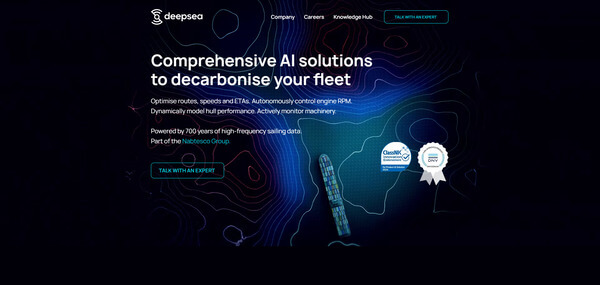
* Image source: DeepSea Official
Website
(https://www.deepsea.ai/)
(https://www.deepsea.ai/)
Core Capabilities
AI Fuel, CII &
Route Optimization
Route Optimization
- With the CII tracking feature, AI helps maintain and predict vessel performance.
- AI dynamically evaluates speeds and routes to suggest more fuel-efficient alternatives
- While complying with Europe-specific restrictions and regulations, it supports operations aimed at lower fuel consumption.
For Fleets with a Mix
of Older and Newly
Built Vessels
For Independent Ship
Management Companies
of Older and Newly
Built Vessels
For Independent Ship
Management Companies
Smart Ship Hub
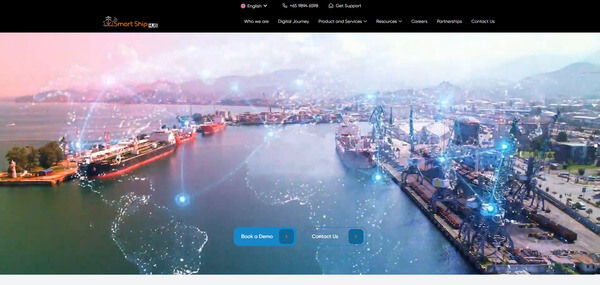
* Image source: Smart Ship Hub Official
Website
(https://smartshiphub.com/)
(https://smartshiphub.com/)
Core Capabilities
Data integration across a mixed fleet
- Supports aggregation of vessel data across different manufacturers and standards, as well as data from multiple vessels.
- Visualizes information distributed across onboard systems and supports building an environment for centralized management.
- Supports information sharing between shore teams and fleets with older vessels, older equipment, newly built vessels and new equipment.