
WiDE(WinGD Ltd.)
Index
View All
As the maritime industry works to improve operational efficiency while meeting sustainability demands, shipowners and operators need better ways to use vessel and engine data. This article explains the key functions of WiDE, WinGD’s vessel management system, and how it can support fleet optimization through condition monitoring, anomaly detection, and predictive maintenance.
What You Will Learn in This Article
- Strengths:
Anomaly detection and predictive maintenance using digital twin technology and machine learning. - Benefits:
How WiDE can help reduce unexpected downtime and support lower operating and maintenance costs. - Best-Fit Companies:
Shipping companies, vessel operators, and ship management firms facing unexpected equipment issues, rising maintenance costs, or increasing environmental compliance requirements.
Key Features of WiDE
Precise Condition Monitoring with Digital Twin Technology
WiDE creates a proprietary digital twin based on actual engine test data and compares real-time operating conditions with baseline performance. This comparison helps operators identify opportunities for operational improvement and detect subtle signs of anomalies before they develop into more serious issues.
Advanced Predictive Maintenance Using Machine Learning
Using data analytics and machine learning algorithms, WiDE can predict component failures before they occur. It also helps detect subtle abnormalities that may not be captured by conventional alarm thresholds, supporting a shift from reactive maintenance to predictive maintenance.
POINT
Finding the Ideal
Solution for
Your Organization
Solution for
Your Organization
As explored above, the core strengths and focus of each system vary significantly. Finding the right solution starts with assessing your fleet's specific management goals and operational scale. To simplify your choice, we have categorized top-tier vessel management software by company type. Explore our recommendations below to find the ideal fit for your organization.
Main Functions
- Data collection
- Component diagnostics
- Predictive maintenance
- Troubleshooting support
- Maintenance planning
- WiDE online application
Scalability and Future Potential
WiDE is designed to integrate with other solutions, including energy management systems and voyage optimization systems. One example is its integration with QUAD from Propulsion Analytics. By identifying performance degradation factors not only in the engine but also in areas such as hull and propeller fouling, the system can support fuel consumption analysis and CII assessment. Depending on the existing equipment configuration, WiDE may also support smoother expansion to additional functions.
Compliance with Industry Regulations and Standards
WiDE has received SP0 Cyber Secure Essential type approval from DNV, indicating that the system is designed with cybersecurity requirements in mind. As the maritime industry faces stricter environmental expectations related to greenhouse gas reduction and fuel efficiency, WiDE can also support companies’ compliance efforts by visualizing and analyzing operational data.
Source: WinGD Official Website (https://wingd.com/products-solutions/digital-optimisation/wide/)
Pricing and Plans
WiDE is offered on a subscription basis. Specific pricing depends on vessel configuration and operational requirements, so companies should contact WinGD directly for a customized quotation. In addition to installation on newbuild vessels, WiDE can also be retrofitted to electronically controlled engines already in operation.
Use Cases (Expected Scenarios)
Subtle temperature fluctuations that conventional alarms cannot detect can lead to serious damage and unexpected downtime. With WiDE, the system can detect these abnormalities early and notify remote experts of a possible fluid leak before an alarm is triggered. This allows components to be replaced before the issue escalates, helping operators avoid major damage, reduce operating costs, and maintain uptime.
Source: WinGD Official Website (https://wingd.com/products-solutions/digital-optimisation/wide/)
Support and After-Sales Services
WinGD 24X7 Support provides access to an emergency support desk by phone or email 24 hours a day, 365 days a year. Using data shared through the cloud, experts can support remote troubleshooting and assist onboard crews with response guidance and manuals when anomalies are detected.
WinGD also offers comprehensive support through its global network, including on-site dispatch of field engineers and spare parts supply.
Company Overview
- Company Name: WinGD Ltd.
- Address: Schützenstrasse 3, CH-8400 Winterthur, Switzerland
- Phone: +41 52 264 8844
- Official Website: https://wingd.com/
3 Recommended
Marine Fleet Management Software
Marine Fleet Management Software
For Frequent Hazardous
or Long-Distance
Voyages
For Marine Fleet
Management Companies
or Long-Distance
Voyages
For Marine Fleet
Management Companies
MaSSA-One

* Image source: BEMAC Official
Website
(https://www.massa-one.com/english/)
(https://www.massa-one.com/english/)
Core Capabilities
Condition monitoring and anomaly detection
- Enables early detection of anomalies using data-driven automatic thresholds and expert-defined multi-condition detection.
- In the event of a failure, real-time data helps speed up root-cause identification, reducing downtime.
- This supports the prevention of future accidents and issues, contributing to reduced damage and losses involving vessels and cargo.
For Companies with
Frequent Business
in the EU
For Marine Shipping
Companies
Frequent Business
in the EU
For Marine Shipping
Companies
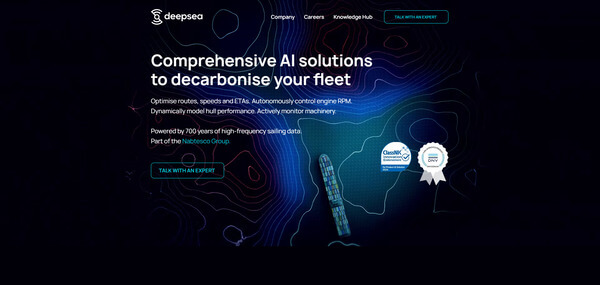
DeepSea
* Image source: DeepSea Official
Website
(https://www.deepsea.ai/)
(https://www.deepsea.ai/)
Core Capabilities
AI Fuel, CII &
Route Optimization
Route Optimization
- With the CII tracking feature, AI helps maintain and predict vessel performance.
- AI dynamically evaluates speeds and routes to suggest more fuel-efficient alternatives
- While complying with Europe-specific restrictions and regulations, it supports operations aimed at lower fuel consumption.
For Fleets with a Mix
of Older and Newly
Built Vessels
For Independent Ship
Management Companies
of Older and Newly
Built Vessels
For Independent Ship
Management Companies
Smart Ship Hub
* Image source: Smart Ship Hub Official
Website
(https://smartshiphub.com/)
(https://smartshiphub.com/)
Core Capabilities
Data integration across a mixed fleet
- Supports aggregation of vessel data across different manufacturers and standards, as well as data from multiple vessels.
- Visualizes information distributed across onboard systems and supports building an environment for centralized management.
- Supports information sharing between shore teams and fleets with older vessels, older equipment, newly built vessels and new equipment.